

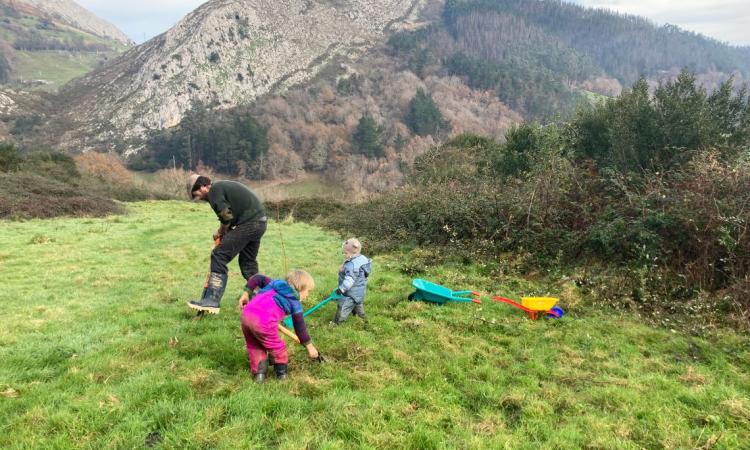
When Luke and I first arrived in Asturias in 2018, we were two wildlife storytellers who had burnt ourselves out travelling the world documenting other people's conservation work. We didn't yet know that our own story was waiting for us on seven exhausted hectares of former dairy land at the foot of the majestic Picos de Europa mountains.
The place was worn out – a monoculture grassland, bramble creeping in thick and unproductive carpets. There were no ponds, no hedgerows- just silence. And yet something in the land resonated, a familiarity neither of us could quite explain. Yet we could imagine what might return if we simply stepped back, listened, and let the place breathe again.
Seven years on, that instinct has grown into an ongoing, often chaotic, always humbling rewilding project. We’ve restored wetlands, planted hedgerows, allowed native woodland to expand and experimented endlessly with grazing. We have removed what feels like miles of barbed wire, and watched life quietly return: foxes and badgers breeding, garden dormice in nest boxes, over 113 bird species recorded, amphibians appearing the moment water arrived, and an incredible 16 bat species documented on site.
We‘ve also made mistakes - many of them. And we’ve learned that small-scale rewilding is not neat or linear. It is responsive. It asks you to pay attention, to adapt, and to stay humble.
For anyone beginning a rewilding journey - whether on a whole farm or a tiny patch - here are the lessons we’ve learned the long way around.
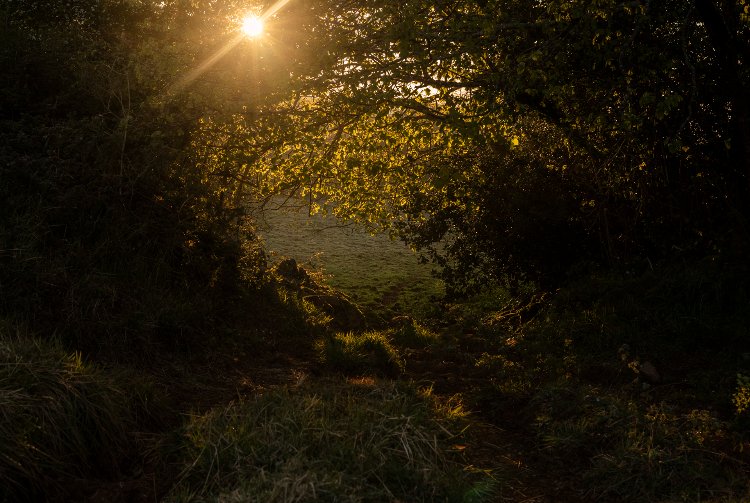
When we moved in, we were overflowing with ideas: food forests! Wildflower meadows! Ponds everywhere!
Our first advice to anyone now is: go slow.
But I'll offer one gentle caveat: fruit trees. They take time to establish, and if you're hoping for sustenance from the land, it can make sense to get them in early.
Our mistake wasn't planting them - it was where we planted them. Those first saplings were lost to realities we hadn’t yet learned to read: winter flooding and windburn from ferocious gusts that roar down the valley. We planted into an imagined landscape, not the real one.
So now we recommend one simple thing:
Wait. Watch. Then act.
Watch where water gathers after rain.
Watch the paths animals naturally use.
Watch where frost lingers, where wind funnels, where the sun first touches the land.
And don't just watch for a week. If you can, watch for a year. Read the seasons. Plant trees only in the dormant months, when they can settle without stress or the need for constant watering.
The same patience applies to clearing scrub. Many species have evolved alongside disturbance - but timing matters. Whatever you do, don't slash bramble in spring just because it looks untidy. Birds, mammals, reptiles and countless invertebrates use it for breeding and shelter. A misplaced cut can wipe out an entire season of life.
Rewilding isn't about imposing a vision; it's about building a relationship.
Observe first. Act later. Let the land reveal its logic.
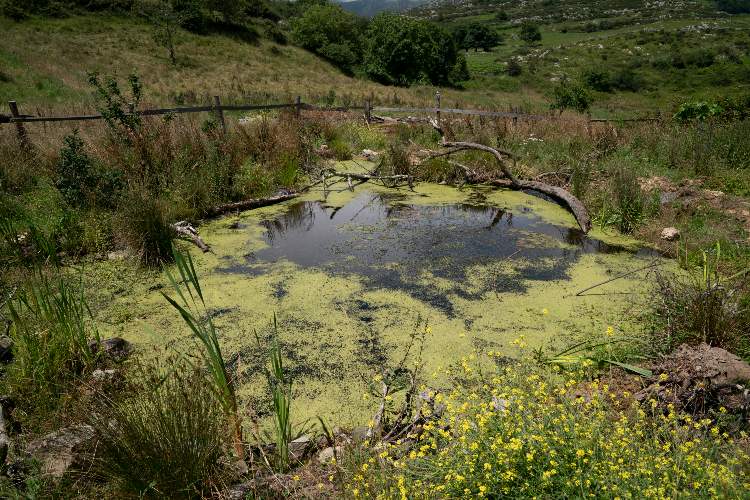
Our land had no standing water, and everything else suffered because of it.
Pond-building transformed Wild Finca faster than any other intervention. Within weeks:
• Amphibians appeared, as if from nowhere
• Dragonflies hovered over new shallows
• Grass snakes mated in the margins
• Birds used the ponds as stepping stones through the valley
Water is life's multiplier. Whether you have a farm or a back garden, creating a water source is the most generous investment you can make for your wild neighbours.
We began with a Knepp-inspired "Hands-off” approach and a couple of horses and sheep. It didn't work for us.
With no wild grazers and too few domestic ones, ecological succession surged ahead. Bramble swallowed entire meadows. Orchids, shrikes and Wasp Spiders disappeared. Other areas were hammered by over-grazing.
Eventually, we understood what our land was asking for: a shifting mosaic, not abandonment.
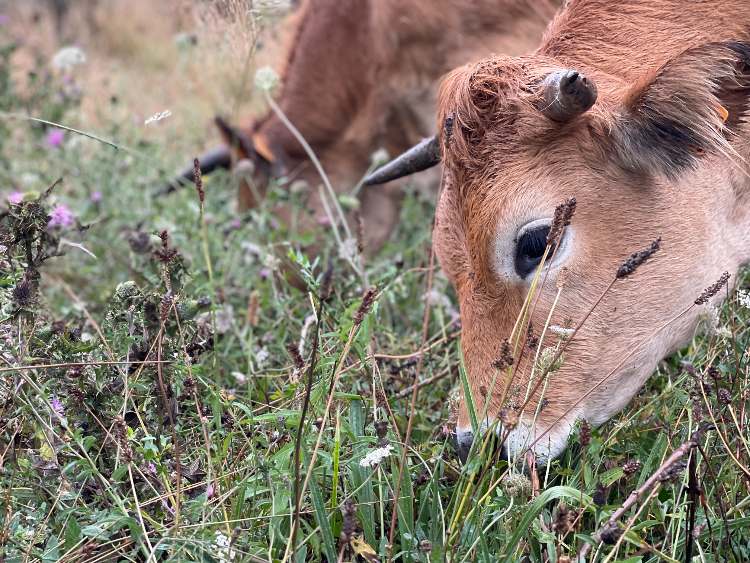
We tried different species. Xalda sheep ate every orchid and sapling they could find, so they moved on. Asturcón ponies and Casina cattle, however, were perfect. Echoes of the extinct Aurochs and Tarpan, they created pockets of openness, kicked seeds into disturbed soil, and fed an expanding community of dung beetles.
But on small land, livestock can only mimic wild processes so far. Which is why, some of the time, we became the missing megafauna - cutting corridors, opening glades, disturbing soil in deliberate, thoughtful ways.
If you're new to rewilding:
Don't fear grazing; learn to use it.
It's a tool - powerful, necessary, and always evolving. And if you can't keep grazers, consider how you might fill that ecological role.
When we arrived at Wild Finca, the land was stitched together with barbed wire. Redundant field divisions, boundaries nobody seemed to remember the logic of. One of our first big jobs was taking all of that out. And then, of course, we put new fencing in.
Full of good intentions and grazing theory, we divided the land into smaller blocks for rotational grazing, added wildlife-friendly lines to protect young trees, and created enclosures around ponds and corridors. For years, we tweaked and adjusted those divisions… and now we find ourselves in the next phase of the project: taking fences out again.
That whole back-and-forth – why we fenced, where it helped, where it hindered – could (and does in my book No Paradise with Wolves) fill a chapter on its own. The short version is this:
• More open, continuous space is almost always better for wildlife
• Some strategic barriers are still necessary (to keep livestock out of ponds, to give saplings a fighting chance, to mark boundaries clearly for neighbours and hunters)
• Good, wildlife-friendly fencing is expensive and time-consuming, so think carefully about whether it is really necessary!
If you are starting, map not just what is there, but what might need to move or disappear in ten years. Think in terms of future wildlife corridors, not just present-day convenience. Temporary electric lines are far easier to undo than permanent posts and wire.
And then there are the psychological fences.
Living in a landscape with wolves and bears - even if they don't pass your gate every week - means unpicking a lot of inherited fear and story. The Iberian Wolf hasn't been on our land itself for over fifty years, but in Asturias, it remains a cultural fault line. Bumper stickers that read "Con lobos no hay paraíso” ("With wolves there is no paradise”) aren't abstract slogans; they sit on cars driven by people whose families really have lost animals.
We gradually learned that coexistence isn't an idea, its a daily practice:
• Shutting the chickens in at night
• Adjusting routines during migration and lambing seasons
• Keeping our animals safe without slipping into hostility towards wild ones
• Listening properly to farmers' stories of loss and frustration
• Accepting that any conservation vision has to include human realities, not overwrite them
We've also had to face another uncomfortable layer: humans who take advantage of open land. The more porous and wildlife-friendly our boundaries became, the easier it was for hunters to cross them too. Part of removing obstacles for wildlife has meant getting clearer and more confident with our human boundaries – conversations, and sometimes simply being visibly present on the land.
If rewilding asks anything of us, it is empathy – across species, and across fences.
Rewilding is full of setbacks: leaking ponds (herons a blessing and a curse for our ponds, but so too are our dogs who love a mad-moment careening around the edges, and the horses having a paw before they wade in), eaten saplings, droughts, storms.
But the quiet wins add up:
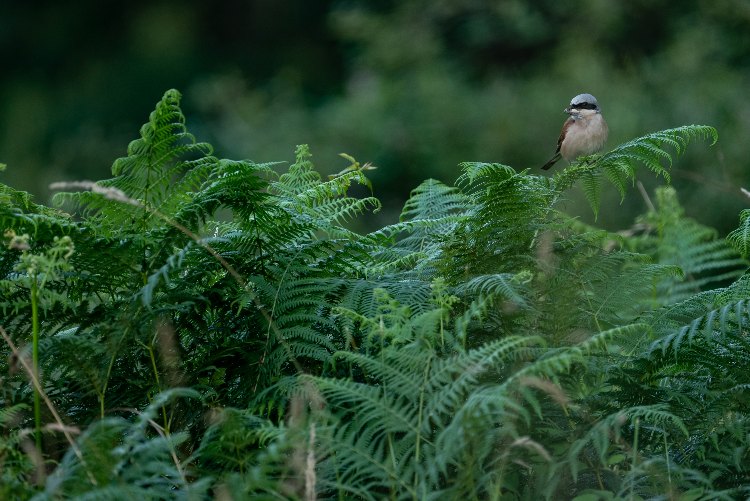
• A Red-backed Shrike returning to nest.
• Orchids reappeared because grazing pressure changed
• Garden Dormice using the nest boxes we put up on a hunch
• Bats are hunting low over our newly dug ponds
• Our boys saying "Cuckoo” and "Bumblebee" before they could pronounce their own names
Rewilding isn't a straight line. It's a slow build-up of quiet hope.
We arrived with enthusiasm and almost no practical knowledge, apart from my husband Luke, who had spent his youth helping at a local Nature Reserve. What carried us was community - ecologists who shared wisdom, farmers who tolerated our questions, and workawayer volunteers who helped plant hundreds of trees and dig ponds.
You don't need to know everything.
You do need people.
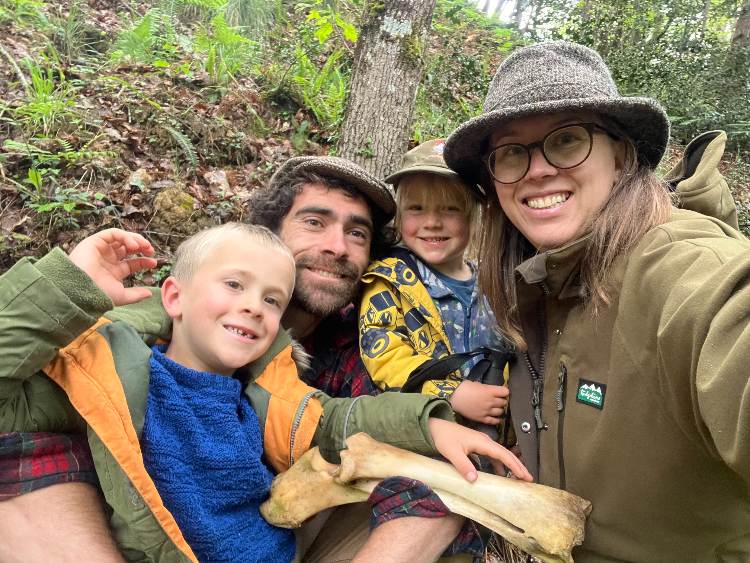
Our two boys were born into this project. They've grown up tracking fox prints, listening for owls at dusk, and checking camera traps with the zeal others reserve for screens. Watching them inhabit this place reminded us that rewilding is not simply land work - its culture work.
It changes the way you parent, the way you see time, and the way you understand responsibility.
And perhaps that is the truest gift: rewilding teaches you how to belong.
To a place, to a community, to the living world itself.
If you begin anywhere, begin small - and begin with trust.
Trust that the land remembers.
Trust that mistakes are part of the process.
Trust that you don't need vast acreage or a perfect plan.
All you need is attention, patience, and the courage to let the wild back in.
Author Bio
Katie Stacey is a writer and co-founder of Wild Finca, a rewilding project in northern Spain. Her debut book, No Paradise with Wolves, chronicles her family’s journey from documenting nature to living within it. She also founded The Wild Shift, a nature-led parenting initiative helping families reconnect with the living world.
Get your copy of No Paradise with Wolves here: https://www.wildfinca.com/no-paradise-with-wolves
Follow Katie’s work here: https://thewildshift.com/
Clicking links may earn us commission. . Stock images by Depositphotos.
Welcome to Conservation Mag where we celebrate nature preservation through ecotourism and wildlife travel while we look for ways to preserve our heritage by supporting nature conservation. Starting conversations about the positive action people like you and I are taking to make a change.
