


In January 2026, more than 132,000 hectares burned across the Western Cape in a single month. The instinct, as always, was to ask who was to blame. Municipalities? The climate crisis? Irresponsible land management? All actors have a piece of the pie. The more useful questions, however, are what allowed these fires to become so catastrophic — and what can be done to reverse the trend.
Let’s start here: fire is not foreign to the Cape. Fynbos — one of the world's six recognised floral kingdoms, home to over 9,000 plant species, two-thirds of which are found nowhere else on earth — is not merely fire-tolerant, it is fire-dependent. The landscape has evolved over millennia to absorb fire, recover from it, and in many ways rely on it. The ecological problem is not that the Western Cape burns, it is about what it is burning with.
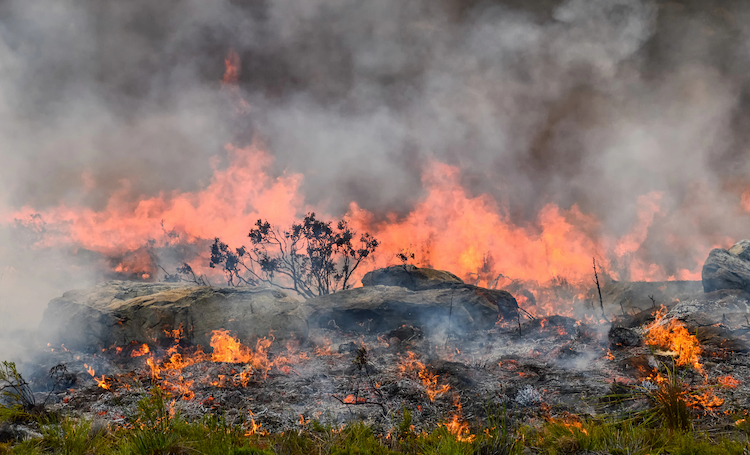
Invasive alien species — particularly Australian Acacias and pines — increase fuel loads in fynbos by up to 60%, producing fires of significantly higher intensity than those in uninvaded vegetation. PeerJ research found that while fynbos ignited rapidly and burned completely as nature intended, invasive alien plants burned with the highest intensity of all vegetation groups — potentially due to their volatile organic composition. The consequences are measurable and severe: during the 2017 Knysna fires, research showed that fire intensities were higher in pine plantations and invaded areas than in uninvaded fynbos, with invasives making up over half the total area burned. In the March 2015 Cape Peninsula fires, all properties badly damaged were adjacent to stands of invasives. After the 2000 Cape Peninsula fires, soil loss was 60 times higher in pine plantations than in adjacent fynbos.
This is the landscape context into which Greenpop's Reforest Fest returns this Easter weekend — and it gives the annual gathering a renewed sense of ecological urgency.
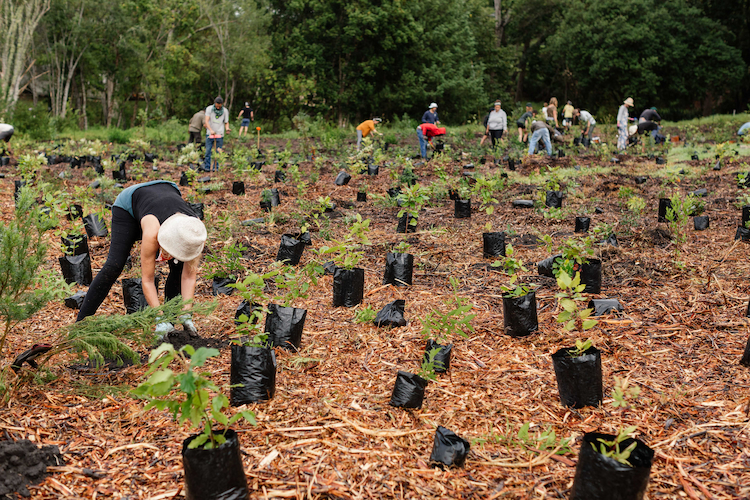
Since 2011, Reforest Fest has brought thousands of people together at Bodhi Khaya Nature Retreat in the Overberg each year to plant indigenous trees in degraded forest patches. Those collective Saturday mornings in the soil have contributed 162,645 trees to the Uilenkraal Forest Restoration Project, spanning the Platbos Forest Reserve, Bodhi Forest, and surrounding properties. This year's festival, running 3–6 April 2026, aims to add another 5,000.
The restoration logic runs deeper than carbon or aesthetics. By replacing invasive species with indigenous vegetation, Greenpop's work helps return the landscape to something fire can move through naturally rather than catastrophically. "Every indigenous tree we plant is more fire-resilient than the invasive species choking our landscapes," says Greenpop CEO Misha Teasdale. "A weekend like this is a step toward healthier, safer ecosystems."
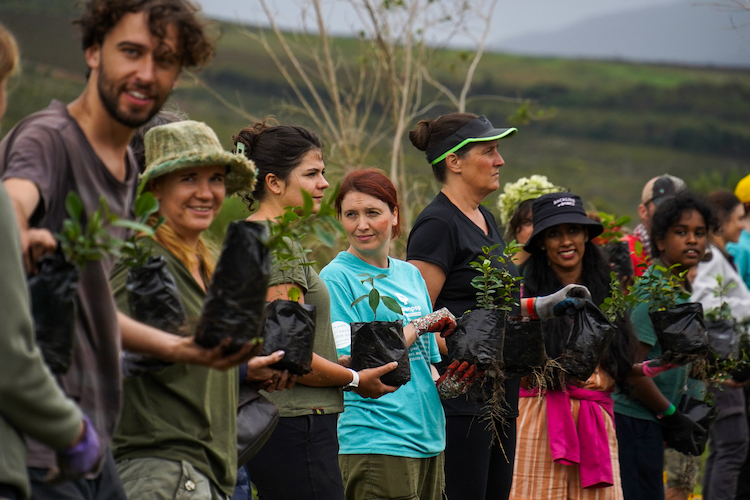
What makes Greenpop's model distinctive is not just what it plants, but how. Reforest Fest is not a corporate tree-planting exercise or a passive offset scheme. It is participatory restoration: festival attendees collectively plant trees alongside expert ecologists who explain what they are doing and why. It is, by design, an education as much as an action. The festival also includes expert-led workshops on agroforestry, permaculture, and bioregionalism — practical frameworks for people learning to live within, rather than against, the ecosystems that sustain them.
This matters because over two-thirds of the Cape's protected areas are already invaded by alien species. The scale of the problem demands responses that are both technical and cultural — people need to understand what is at stake in their own landscapes before they will invest in protecting them.
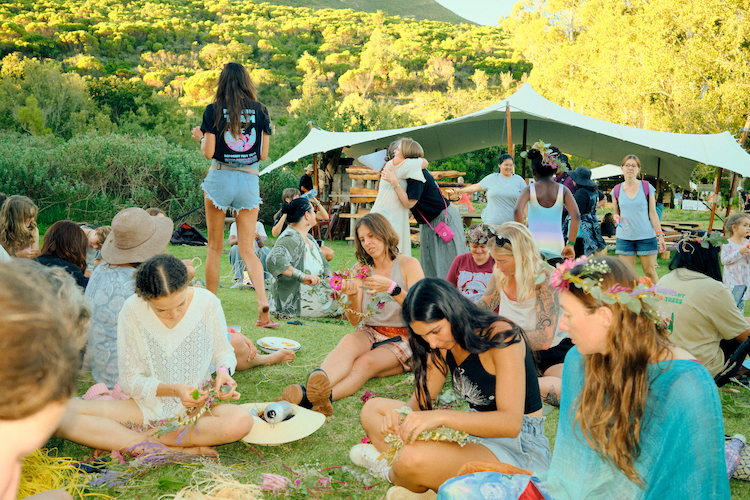
Reforest Fest has also proven that ecological responsibility and celebration are not in competition. In 2025, Greenpop conducted its first environmental audit of the festival and found it to be carbon negative — one of the few large-scale events in Southern Africa to achieve this, in a sector where only one in ten major festivals has any comprehensive environmental strategy at all.
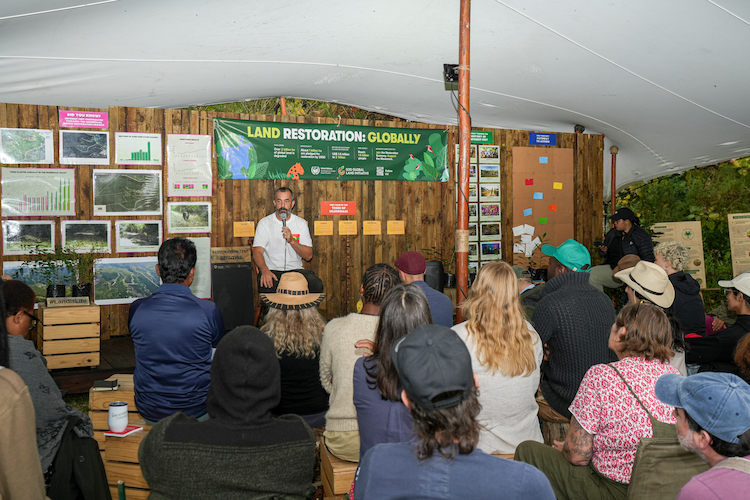
"This isn't a reaction to one fire season," says Claudia Waller, Greenpop's events lead. "Reforest Fest is part of a decades-long commitment to community restoration. But right now, as communities watch their landscapes burn, this work feels more urgent than ever. We're giving people tangible hope and a way to be part of the solution."
In a region where the science is clear, the land is under pressure, and eco-anxiety is rising, Reforest Fest offers something increasingly rare: a place where climate anxiety becomes action, and action becomes community.
Reforest Fest runs 3–6 April 2026 at Bodhi Khaya Nature Retreat, Overberg. Tickets and programme at greenpop.org/reforest-fest.
Please Log in or Create an account to join the conversation.
Clicking links may earn us commission. . Stock images by Depositphotos.
Ask the Wise Baobab
Legend says I know everything. Ask for guidance on wildlife, travel paths, and our mission to give a voice to the voiceless.
Welcome to Conservation Mag where we celebrate nature preservation through ecotourism and wildlife travel while we look for ways to preserve our heritage by supporting nature conservation. Starting conversations about the positive action people like you and I are taking to make a change.
