
Deep in the jungle of Buxa Tiger Reserve, I woke up to a morning overshadowed by dark clouds. Heavy drops of remnant rain from the tree canopy were furiously pounding on the tin rooftop of the homestay we had found accommodation in, like synchronized beating of war drums. The hornbills had woken up, along with the rhesus macaques, eager to start their day, jumping between branches and adding to the aerial bombing of water bullets. Looking ahead towards the riverbed, the dark sky was slowly opening a portal amidst the clouds, tinged with orange by the peeking rays of the morning sun. The heavy showers had momentarily mellowed down to a drizzle, and we could see the firewood smoke rising from a shack in the distance. Cameras in hand and looking down to the last of the water drops hanging onto the blades of grass, gathering volume to make the final tumble, we were equally skeptical of the day ahead. Hesitant but prepared, we headed out.
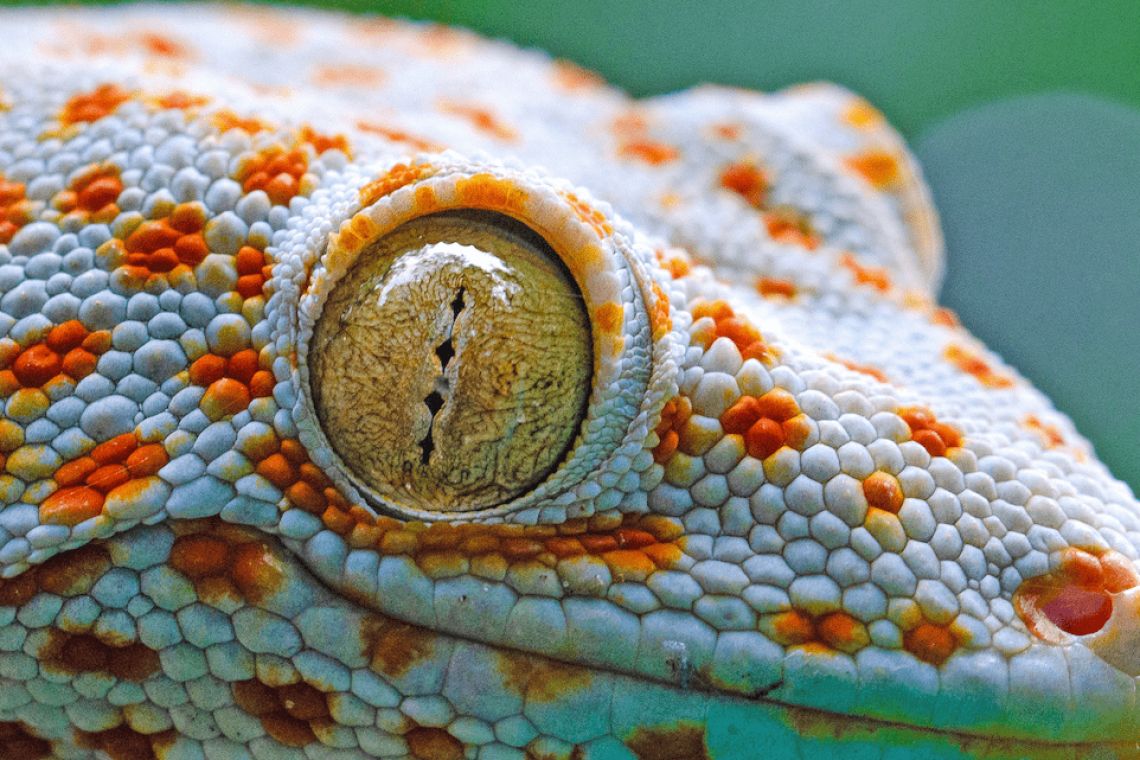
Halfway to the shack, we heard a call – “to-kayy”, “to-kayyy”, with momentary pauses in between. We froze in position. Our day immediately brightened up. Everyone instinctively turned to each other, then in the direction of the call, eyes wide in excitement. Completely unexpected, yet each one of us knew what it meant. “To-kayy” – we tracked it to a hollow of a huge Simul tree, just a few meters away. Named after its call, the tokay gecko is a nocturnal lizard, and throughout the day, it seeks dark hiding spots such as these. We waited in anticipation, fingers half-pressed on the shutter button and our gaze glued through the eyepiece. The tokay emerged briefly.
You can hear the Tokay gecko's call on Conservation Mag's Wild Earth Sounds.
We had been gifted a lifer to start off our annual butterfly expedition, and my first-ever sighting of the tokay. That was the monsoons of 2014.
A Special Kind of Gecko: Introducing the Tokay.
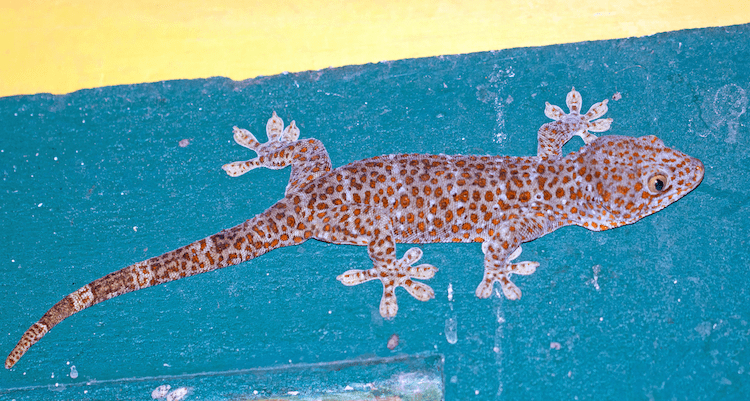
While not rare, the tokay gecko has certainly been a thing of fascination. At up to 16 inches, it ranks as the second biggest gecko in the world, after the New Caledonian giant gecko. If judged on aesthetics alone, the red and blue polka-dotted tokay would be a clear winner.
Over the next decade, I encountered tokays quite often during my travels along north-east India, most frequently under the roofs of community hostels in Assam. In a few remote villages of Arunachal and Manipur that I had the opportunity to visit, tokays were common household residents. The IFAW-WTI-run Centre for Wildlife Rehabilitation and Conservation (CWRC) in Assam had two resident tokays that always showed up in the washrooms. These were rescued individuals, and since their release on the campus, they have made it their permanent home. However, I never would have imagined seeing tokays by the dozens, and it wasn’t a pretty sight.
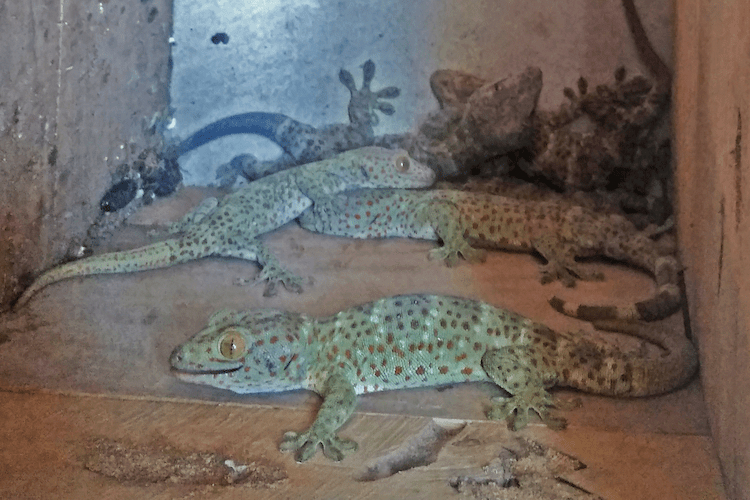
Ten years since Buxa, I was accompanying a team that was following up on a case, tracking an illegal consignment of wildlife articles, moving between the borders of Assam and Meghalaya. In April 2021, just after the world started recovering from the pandemic, the team had intercepted suspicious online conversations through social media leads. Today was the day they had arranged for the “goods” to be exchanged. The goods – 43 tokay geckos, four Chinese pangolins that were still alive, and more than 40 kilograms of pangolin scales, peeled off dead individuals.
The tokays, highly territorial lizards, were cramped into a small wooden box. It was a disaster. If anyone could define ‘annihilation’, this was it. Most of them looked dead, and each one of them had lost color. A natural stress response, the tokays looked skeletal and dull. Unlike the bright and colorful lizard that I saw ten years ago in Buxa, this was a sight that you would detest, a sight that you would like to forget.
Eight people involved with the ‘exchange’ were taken into custody that day, after a carefully strategized operation by enforcement officials. The geckos were eventually released back into the wild, but I was sure most of them wouldn’t survive. While the operation was a success, it pointed out the volume of the trade. Chances were that more poachers like them were active throughout India’s north-east.
From Medicine to Exotic Pets: Why Tokay Geckos Are Disappearing.
The tokay is in high demand in the exotic pet market, and India has been inching towards becoming a significant supplier. Over the past couple of years, the species has been seized multiple times, especially from India’s north-eastern states. In April 2025, the Assam Police in Dibrugarh seized a consignment of 11 geckos and apprehended three smugglers. In September 2025, the Border Security Force seized 14 tokays that were being smuggled across the border from Bangladesh into India. In November, yet again, the special task force of the Assam Police busted another racket, seizing six geckos, one slow loris that was barely alive, and 10.6 kilograms of pangolin scales.
Like the pangolin, which is considered the world’s most trafficked mammal, the tokay could well be the most trafficked reptile. The species is heavily used in traditional oriental medicine and has been a favored raw material for centuries. Users believe that drinking a concoction infused with tokay cures diabetes, asthma, a range of skin problems, erectile dysfunction, and even diseases like HIV and cancer. In South Asian markets, one can find the tokay in all kinds of edible formats – as a pill, as powder to be added to your tea, as infused wine, or as dried meat to be added to bowls of ramen or rice. None of these medicinal claims has been scientifically proven.
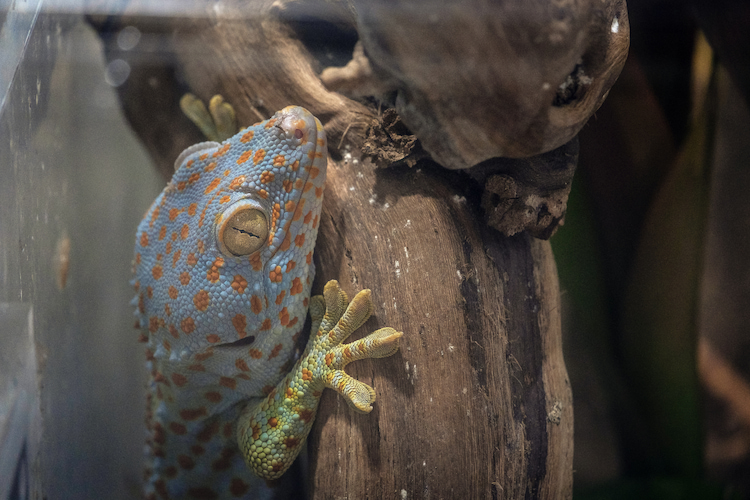
However, beyond the medicinal claims, the tokay is also in demand among exotic pet keepers – people from the United States (USA) and European nations pay top dollar to keep a live one in their terrariums. Between 2006 and 2007, the USA imported at least 180,000 tokay geckos. Distinctly colored and once endemic to South-East Asia, the species has now made its home across the globe. A large number are captured from the wild, and the population of the species is estimated to have declined by as much as 50% in countries like Bangladesh, the Philippines, Indonesia, Myanmar, Thailand, Vietnam, and China. While most of the shipments originate from Indonesia, the largest known exporter of the species, demand has also seeped into India’s north-eastern states. The status of the species in India has yet to be determined.
In states like Florida, known for being the epicenter of invasive reptiles in the USA, the tokay has, in fact, become an unwanted alien. In terms of biodiversity loss, the USA estimates $137 million in damages every year due to invasive wildlife like the tokay or the Burmese python. Florida, being a major port of entry for most of these shipments to the USA, bears the greatest losses after illegal consignments are dumped to avoid legal complications. Exotic pet owners often release alien wildlife when they are not able to manage them, or the animals outgrow their containment. In some other cases, the animal simply escapes. Out in the wild, these lizards often establish their own breeding populations, feeding on native lizards and disrupting local biodiversity. The story is the same across the world, where similar resilient invasive species have established themselves in local ecosystems.
Saving India’s Tokay Geckos Before It’s Too Late.
In 2019, the Convention on International Trade in Endangered Species of Wild Fauna and Flora (CITES) added the tokay to Appendix II, allowing regulations to be placed on the volume of trade in the species. India’s Wildlife (Protection) Act, 1972, accords the tokay gecko the highest level of protection, listing it under Schedule I alongside the tiger and the elephant. While captive breeding facilities exist across Southeast Asian countries like Malaysia and Indonesia, most of the individuals are caught from the wild. For sellers, driven by sheer ignorance and lack of empathy, and fueled by greed for profits, it is a much more budget-friendly proposition than relying on captive breeding centers.
The tokay is losing the battle. Local populations are being decimated, and for most poachers in the remotest regions of India’s north-east, the profits are a welcome addition to existing livelihood opportunities. Though widely available as a species, the tokay won’t be able to tolerate the current volume of exploitation. The call that brightened a gloomy day ten years ago in Buxa is becoming increasingly rare.
Cramped into boxes, these tokays are either ground into dust to be added to someone’s tea or kept as a live showpiece for an American collector. At the losing end are the brightest lizards that call India home and a natural diversity that makes this country unique.

