


I attended UNESCO headquarters in March 2026 to ring in the Decade of Action for Cryospheric Sciences and, further ahead, the International Polar Year (2032–2033). This was preceded by the International Year of Glaciers’ Preservation (2025), whose aims were to raise awareness of the vital role glaciers, snow and ice play in the climate system and water cycle, as well as the far-reaching impacts of rapid glacial melt.
The aims of the Decade for Cryospheric Sciences are to:
The attendees said navigating planetary issues requires a multi-faceted approach across borders and disciplines, with journalists, documentary filmmakers, podcasters, and others urgently needed to connect with policymakers and the public. My grasp of the subtext from these global leaders and scientists is “It's do or die.” Let’s not sugarcoat the reality … this process will have a myriad of challenges to overcome. For example, attendees at UNESCO identified the following problems that impede progress: changing attendance at meetings impairing momentum, disagreement over solutions, ideas slow to advance because of uncertain funding, and political inertia. We can take steps to solve this impasse by creating working groups with all members having clearly established roles, taking meeting minutes with action items assigned to group members, following science-based decisions, practising personal discipline, and embracing strong leadership.
Besides this UNESCO event, I attended ChangeNOW at the Grand Palais in Paris. Overall, I was impressed with the passion, ideas, plans and developments that were discussed at both events. Below I focus on how technology, education and the Internet are transforming the ways in which climate science and knowledge are acquired and disseminated.
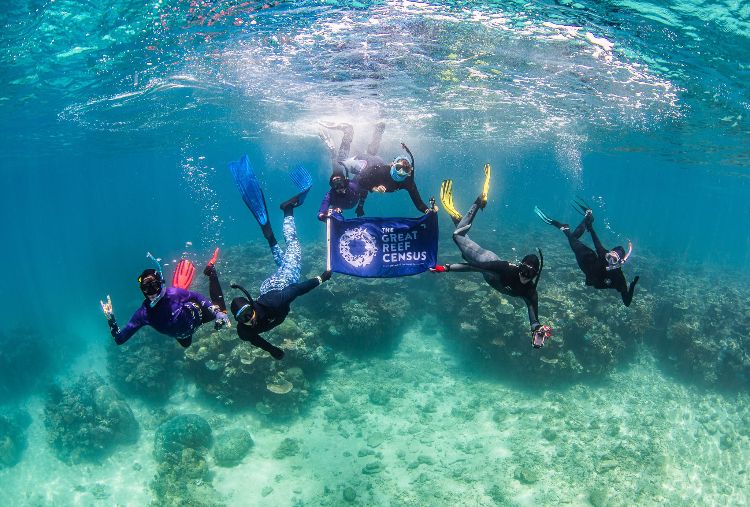
Citizen science allows the public to take part in gathering, analysing or disseminating data in scientific research projects. Many projects require little experience, and when simple protocols are provided, citizens provide relevant information and data for fields such as biodiversity. Resource and time constraints may make it difficult for institutionally based scientists to travel to remote locations; instead, local citizens can be invaluable resources for observation and data collection. Technology is front and centre in this process. As examples, SmartICE technology is a set of climate change adaptation tools developed for Northern regions to measure ice thickness, with remote monitoring and satellite mapping for ice travel safety. Citizens of the Reef leads conservation efforts to protect the Great Barrier Reef through the citizen-led Great Reef Census, which uses in-water surveys to discover the world’s largest coral colony on the Reef. These surveys are processed using AI and forwarded to scientists and marine specialists. The Ocean Cleanup Survey App allows the global community to report plastic pollution in oceans or rivers using smartphones. Educational programmes and centres such as the Reef Intervention Training Program, the SmartICE Training Platform, the University College London Citizen Science Academy, the European Citizen Science Platform and SciStarter, to name just a few, are leading this new movement of citizen science.
I recently published an article based on an interview that I did with a scientist from the Tara Foundation about their upcoming expedition to the Arctic. Rather than arrive with many pre-planned questions, I asked only five in total: 1. Why is this important? 2. What are the objectives? The third question was derived after listening to the objectives. I let his voice carry throughout rather than just extracting sound bites, and I edited for brevity and clarity. As science journalists, we need to carefully craft climate stories to translate complex data into meaningful, science-based narratives.
At ChangeNOW 2026, QuotaClimat director Eva Morel discussed the need for more funding for investigative journalism, climate science training, fact-checking of climate narratives to counteract the spread of disinformation and misinformation, and engaging with climate scientists and experts for greater reporting accuracy.
Citizen journalists use social media, podcasts and YouTube to report on events as they happen, often rooted in their local communities. Educational programmes, media literacy, and ethics and critical-thinking skills training for citizen journalists are on offer from the EU and other platforms. A training guide with nine modules, including how to pitch your media story, has been published by the International HIV/AIDS Alliance.
Trust in traditional media has reached an all-time low, while readership of news online has reached an all-time high. Trust in climate science reports is low, with roughly 50% of EU citizens having difficulty with either unclear or unreliable information in print and on social media.
While 84% agree that climate change is caused by human activity, 52% say traditional media fail to provide clear information, and 49% report difficulty identifying reliable content on social media.
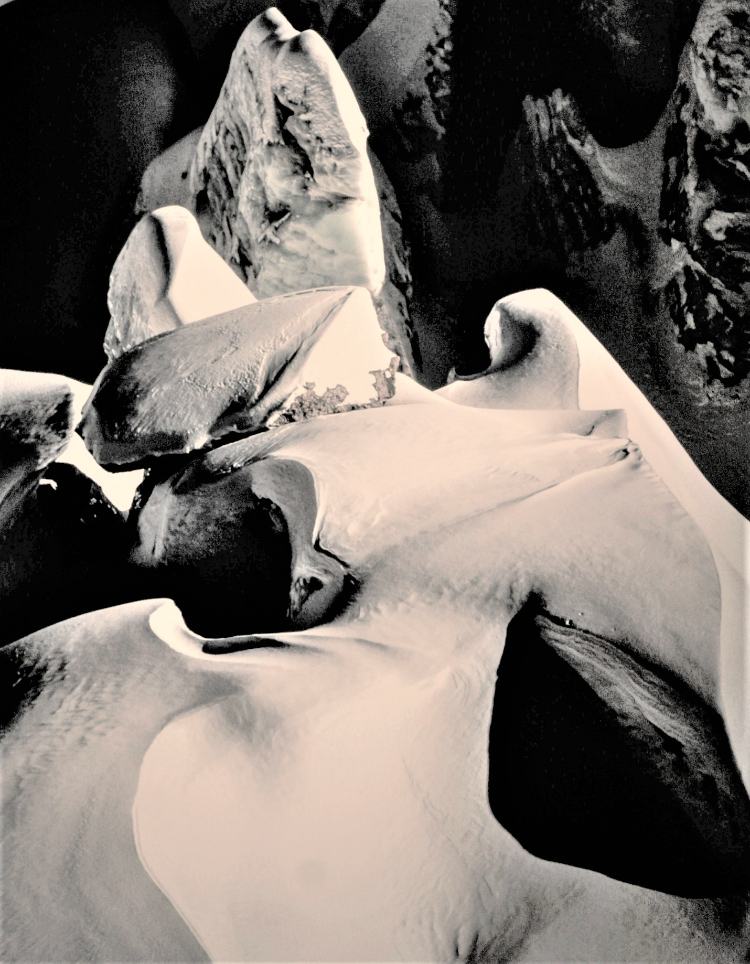
Environmental documentary films provide clear stories, engaging visuals, and emotive messages. I watched the very informative documentary Arctic Glaciers: State of Play (2025) at UNESCO, with the director and a glaciologist providing an in-person discussion after the film. The director said he did not have a preset script but spent several days at the glaciers of Svalbard, where he observed and listened to the field glaciologist, with the script unfolding after these discussions. The glaciologist at the screening talked about the illusion of quick fixes proposed by geoengineering proponents, which detracts from tackling the real root causes of glacier loss. In April I saw Tara: The Coral Odyssey (2017), a visually stunning scientific expedition documentary about Pacific Ocean coral. Documentaries in remote, inaccessible regions – where mountain communities, for example, are living with the day-to-day effects of glacier loss – can be particularly effective. Overall, people say they pay attention to documentaries (39%) more than to major news organisations (33%).
Much work needs to be done to effectively engage with the public and policymakers about climate science in this Decade of Action. The rise of citizen journalism and citizen science is reshaping the way information is gathered and disseminated; however, training, education and press freedom must be part of this new media landscape. More effort needs to be undertaken by journalists to craft educational scientific stories with less emphasis on journalistic sound bites. Incentives are needed to encourage scientists to take part in outreach with the public and policymakers.
Please Log in or Create an account to join the conversation.
Clicking links may earn us commission. . Stock images by Depositphotos.
Ask the Wise Baobab
Legend says I know everything. Ask for guidance on wildlife, travel paths, and our mission to give a voice to the voiceless.
Welcome to Conservation Mag where we celebrate nature preservation through ecotourism and wildlife travel while we look for ways to preserve our heritage by supporting nature conservation. Starting conversations about the positive action people like you and I are taking to make a change.
