
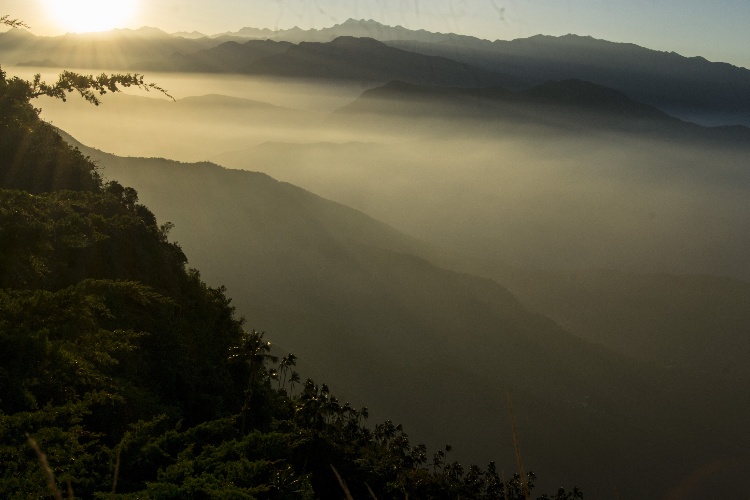
The fog was so thick I could feel it embracing my body, which was still stiff from sleep. It was 5:45 in the morning, and I was navigating a narrow, steep trail through the rugged hills of the cloud forest in the Sierra Nevada de Santa Marta, Colombia.
Along with Leandro, my Wiwa guide, we were searching for the sparkling White-tailed Starfrontlet (Coeligena phalerata), one of the approximately 20 endemic birds that inhabit the world's highest coastal mountain chain.
The Sierra Nevada is a paramount centre of endemism—meaning species found nowhere else on Earth—due to its isolation from the Andes and its abrupt changes in elevation, rising from sea level to snowy peaks of almost 6,000 metres. Its beaches, rainforests, and rugged mountains host over 600 bird species—more than any European country—within an area half the size of Switzerland.
We couldn’t see beyond a couple of metres in front of us; it was hard to tell where the cloud ended and where we began. The loud, sharp calls of Military Macaws (Ara militaris) way above the forest pierced the dense atmosphere. Silhouettes of bromeliads dominated the blurry scenery, sitting on the trunks of their host trees with their sword-like leaves reaching out in every direction.
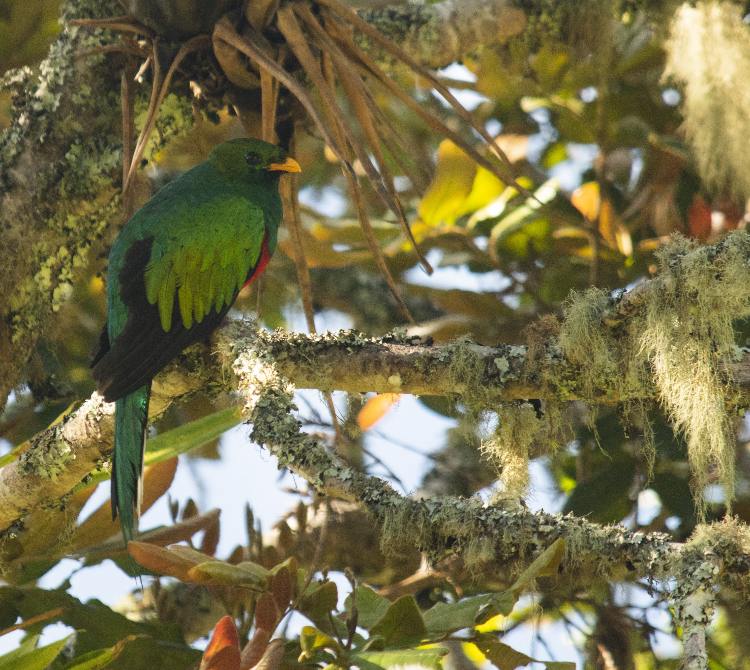
Suddenly, amidst the white veil of clouds, I heard the Squirrel Cuckoo’s (Piaya cayana) alarm call.
“Dani, be careful, Mama Shijkua is telling us to pay attention to the path. Let’s stay here for a couple of minutes,” Leandro advised me. He then shared the story of why the Squirrel Cuckoo is considered a guardian and a sacred bird within the Wiwa culture.
Cultural Guardians of the Sierra
The Sierra is abundant not just in terms of wildlife; it is also home to four Indigenous communities, all descendants of the ancient Tayrona civilization. The Wiwas mostly inhabit the lower ranges of the Sierra, while the Arhuaco and Kogi communities extend further into the high areas, where access is strictly controlled and often restricted to Indigenous peoples.
For all of them, birds are a deeply rooted element of their culture and cosmovision. They represent messengers who convey knowledge of the surroundings, and distinct species are even believed to deliver personal, spiritual advice.
These narratives are central to the Wiwa community, as their ancestral wisdom is passed down through oral tradition. The most common species of the Sierra have their own tales woven over centuries of living on the land, created to provide guidance in life.
A Modern Challenge to Ancient Wisdom
However, these myths are now facing a mighty competitor as the primary source of knowledge for new Wiwa generations. With the widespread arrival of technology, mobile phones, and internet connection, information from the outside world is stealthily pervading the Indigenous communities of the Sierra Nevada. Younger generations are finding social media, YouTube, and other online sources increasingly appealing.
This comes with the risk of making the oral tradition—its tales and stories—seem mundane to children and teenagers.
“It’s a threat to the Indigenous Peoples of the Sierra Nevada, and especially for the youth, who are showing more interest in around-the-world stories or just random stuff than our own history and culture,” explains Eduardo Gil, an influential member of the Wiwa community and founder of Wiwa Tours, one of the first Indigenous-owned tourism companies in the country.
“Modern society indirectly but widely preaches that you have to be updated and follow its trends; if not, you are not good enough and you will miss out. And that is affecting where our youngsters are focusing their energy and attention.”
The Lesson of the Shuana
Luckily, this is not the first time in history that the Indigenous communities of the Sierra have dealt with external influences, and they have a special bird that carries a relevant lesson.
“Shuana (the Black-chested Jay, Cyanocorax affinis) doesn’t have a true identity,” Eduardo says. “If you pay attention to a group of Shuanas, you can easily hear them imitating the calls of other birds, hiding in the vegetation. They tried to be like the rest, tried to sing like other birds, and lost their own song on the way.”
“They teach us that if we don’t respect ourselves, if we don’t strengthen our identity as Indigenous, we will end up being useless for our communities, for society, and for the Madre Tierra (Mother Earth) itself.”
Revitalizing Culture Through Birdwatching
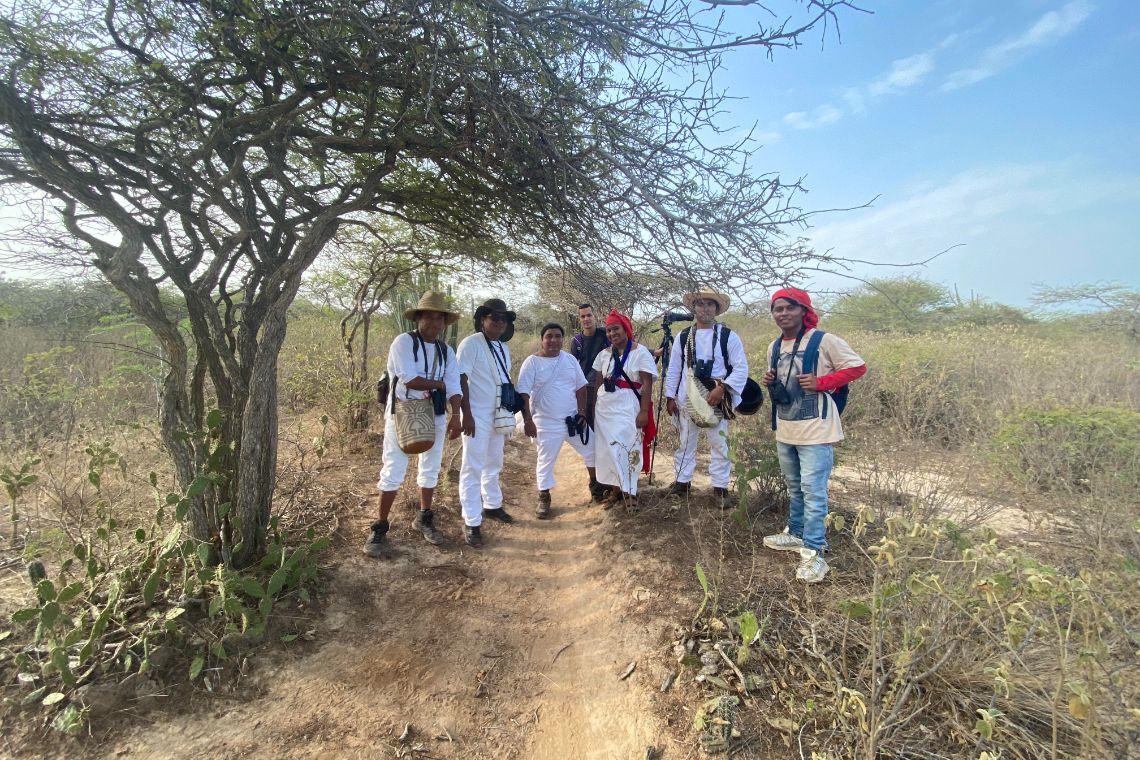
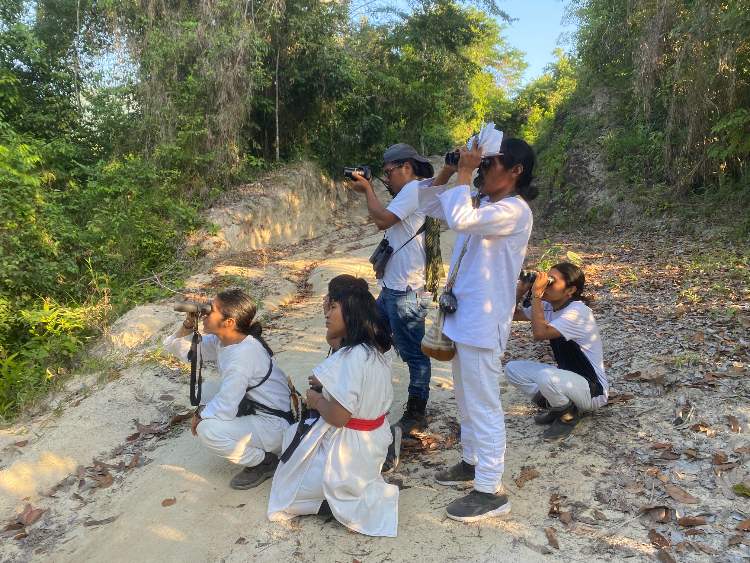
Understanding the need to protect their culture while adapting to the opportunities of the modern world, Eduardo has gathered a small group of young Wiwas. His intention is to use birds as catalysts to revitalize the youth's interest in their tradition.
As the Sierra Nevada draws thousands of birders every year, and the Wiwa worldview is so intimately intertwined with birds, Eduardo believes that with training, these youngsters can become birdwatching guides capable of combining bird-related Indigenous wisdom with scientific knowledge.
Imagine that every species you find while birding has its own tale, containing not just life lessons, but also physical, ecological, and behavioral descriptions. These myths become an integrated unit of ecological and ornithological knowledge, upon which the Wiwa’s value system is forged.
It would breed a birdwatching tour that goes way beyond the next eBird list, the next ‘lifer,’ or the next perfect photograph. It promises an experience that takes you deep into the territory, within the stories where people grow, learn, and dream, in a singular bird realm.
Bridging the Gap
Despite thousands of Indigenous people living on the Sierra's bird-filled slopes, the birdwatching industry remains mostly outside their control. Most of the time, birders arrive with guides from their own countries or hire national operators who send guides from Bogotá or Medellín.
They seldom go with a local guide, and rarely with an Indigenous one, despite the fact that these communities grow up learning from the birds from an early age.
The dominant influence of Western worldviews has shaped how the world of birds is presented to the public. Barriers such as the need for English fluency, limited access to scientific resources, and the cost of optical equipment remain significant hurdles for Indigenous youth.
That’s where Eduardo is bridging the gap. Through Wiwa Tours, he has hired an English teacher and an ornithologist to teach the soon-to-be guides the technical skills they need. Additionally, his mother, Ana Gil, is teaching them the traditional songs the Wiwas used to sing to communicate with various birds.
These songs, which lack lyrics, feature unique and complex patterns of guttural sounds that have the capacity to transport you to another era. The students are also learning dances that accompany the songs, where movement and sound come together to honor the birds and express gratitude.
A New Path Forward
This initiative mixes the old and the new to create a unique experience in, for, and about the Sierra Nevada and its feathered inhabitants. It renovates a sense of belonging and pride in being Wiwa.
In a moment of social and environmental turmoil, it feels reassuring to look at birds to find inspiration for our own lives. They invite us to be still, to watch attentively, and to listen carefully—to slow down and come back to our bodies.
Birds will always be there for the Wiwas to remember what life is truly about. Perhaps it is time for us to do the same.
Author Bio
Daniel Couceiro is a biologist, environmental educator, and writer. Daniel has managed conservation programs in the Peruvian Amazon and Colombia, where he became a National Geographic Explorer. He leads academic field programs in Belize and New Zealand, but spends most of his time in the Balkan mountains of Bulgaria.

