
Exploring species loss, habitat destruction, policy failures, and the urgent need for nature restoration.
Introduction
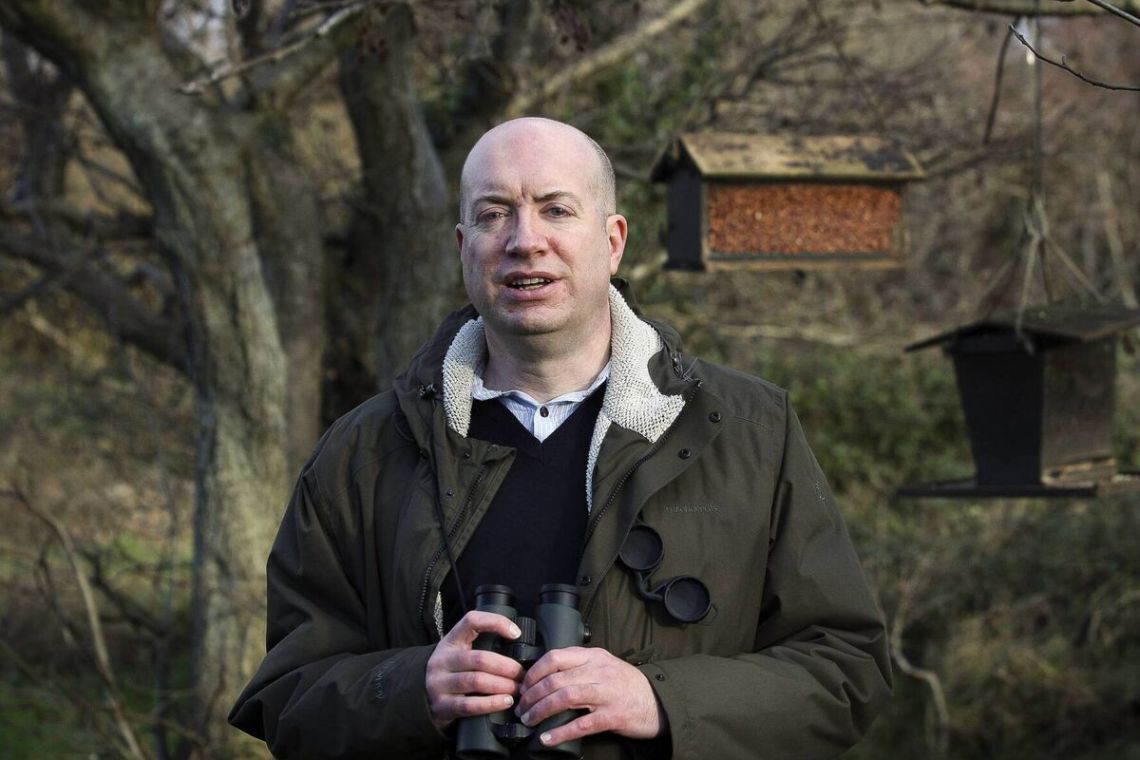
In this interview, Eamonn Coyle speaks with Niall Hatch of BirdWatch Ireland about the deepening biodiversity crisis facing Ireland, the hard realities behind species decline, and the practical work now underway to protect what remains. From seabird conservation and birds of prey to farmland loss, native woodland destruction, water pollution and the growing conflict between policy and environmental need, Niall sets out a blunt assessment of where the country stands.
He also explains how BirdWatch Ireland has evolved into a leading national voice for conservation, and why, despite the scale of ecological damage, there is still a credible basis for hope through restoration.
Profile
Niall Hatch is BirdWatch Ireland’s head of Communications and Development, heading up the NGO's membership recruitment, fundraising, education and communications work. He edits the organisation’s membership magazines, namely Wings and Bird Detectives, and co-hosts its popular In Your Nature podcast. A keen birdwatcher since early childhood, Niall is a frequent contributor to radio and television programmes, most notably as a regular panellist on RTÉ Radio One’s Mooney Goes Wild programme, writer and presenter of many of its Nature on One documentaries and co-presenter of its annual live seven-hour Dawn Chorus broadcast, for which he has won a Rose d’Or award. He also works closely with BirdWatch Ireland’s fellow BirdLife International Partners and is a qualified solicitor and a graduate of University College Dublin and Cornell University, New York.
Q1 – Can you give an account of the work that BirdWatch Ireland has undertaken since it was established, and how it has grown to become Ireland's largest wildlife conservation charity?
Since its establishment in 1968, BirdWatch Ireland has grown from a waterbird conservation movement into Ireland’s largest independent bird conservation charity, combining scientific research, species protection, reserve management, education, and policy advocacy.
Our work began with wetland and wildfowl conservation, including the Wexford Wildfowl Reserve, and has since expanded across the country. Today, we manage a network of twenty nature reserves, carry out major national surveys and atlas work, support citizen science, and campaign for stronger nature laws and restoration measures.
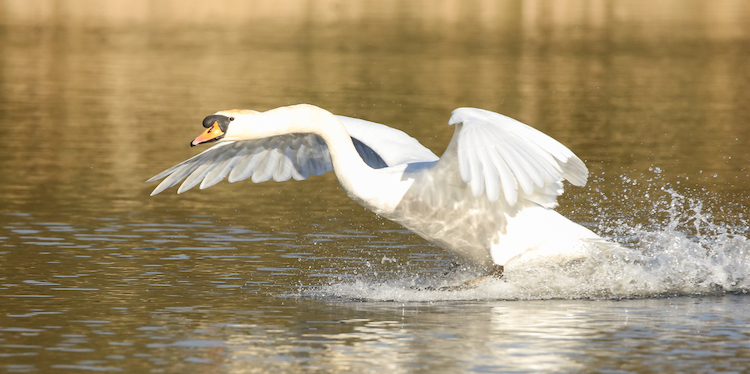
Ireland is also of major international importance for seabirds and is home to twenty-four different species.
With more than 15,000 members and supporters and over 30 branches, BirdWatch Ireland has become a powerful national voice for birds, biodiversity, and conservation action. I am especially proud that we helped save the endangered Roseate Tern, amongst others, with around 1,700 pairs now breeding on Rockabill Island.
Q2 – What are the current important projects that are underway?
BirdWatch Ireland is currently involved in a number of important and practical initiatives. Most recently, we have partnered with RSPB Northern Ireland on the PEACEPLUS-funded PeacePlus Nature cross-border conservation project to help protect breeding waders in County Donegal. We also now have a warden on Tory Island and other islands, working to safeguard vulnerable seabird populations.
We are also heavily involved in the landmark Bird Atlas project, which is building a detailed picture of bird distribution across Ireland. As this survey takes place only once every twenty years, it will provide an especially important measure of how our bird populations have changed since the last atlas period, which covered the years 2007 to 2011.
On behalf of the NPWS, we are also involved in national bird monitoring, and each winter our survey teams carry out major counts of wetland birds across the country. Alongside that fieldwork, we play an active role in public consultation, making the scientific and policy case for stronger protection of birds, habitats, and ecosystems.
We also continue to push hard on the development and implementation of a national Nature Restoration Plan.
Q3 – Your purpose of being is very different to the more powerful Irish Farmers Association — how do you navigate that chasm?
I do not accept that there has to be a chasm. Birdwatch Ireland has worked closely with farmers on biodiversity restoration, and in reality, our long-term interests should be aligned. We, as the national partner of BirdLife International, work for the common good of both wildlife and farmers alike. Over the years, we have also worked closely with the Government, at both national and EU level, on the shaping of agricultural policy.
The ACRES scheme is certainly a step in the right direction, and I firmly believe farmers should be rewarded for ecological delivery rather than the State repeatedly paying for environmental failure.
At present, we remain one of the most ecologically depleted landscapes in Europe, and in many cases, you can find more biodiversity in the parks and suburbs of Dublin city than on intensively managed rural farmland. That should be a national wake-up call. Our farmland birds are among the most threatened of all, and unless that is addressed urgently, we stand to lose far more of them.
That is why farmers, environmental groups, and the Government must work together, because biodiversity restoration is not a fringe issue; it is in the national interest.
Q4 – Whilst BirdWatch Ireland is working hard to protect and reintroduce birds of prey into the environment, other interests are trying to capture and kill them — how serious is this problem?
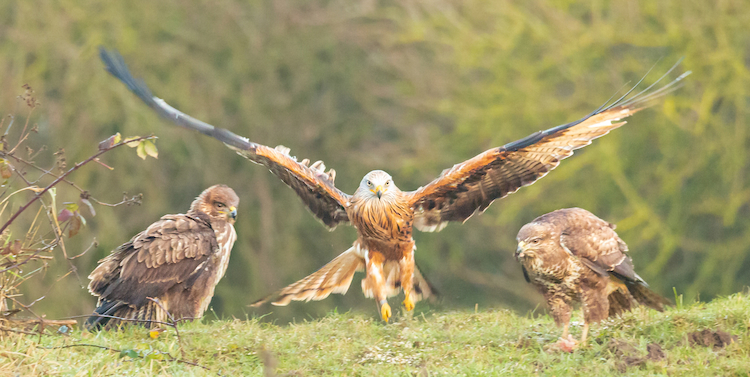
The formal reintroduction work has largely been led by the NPWS and the Golden Eagle Trust, and although BirdWatch Ireland has not directly been involved, we very much support those efforts. I do think attitudes towards birds of prey have improved greatly across Ireland, and it is genuinely encouraging to once again hear and see species such as Buzzards and Red Kites that were once pushed to national extinction now taking their rightful places back in our skies.
But the threat remains very serious. Birds of prey are still vulnerable to persecution through deliberate killing, trapping, and secondary poisoning. One of the clearest examples is the use of poisoned bait intended for animals such as mink, rats, foxes or crows. That practice is illegal, yet it still occurs, and the consequences for protected raptors can be devastating. At the same time, species such as the Hen Harrier and other ground nesting birds remain under real pressure, due in large part to habitat loss.
So, while progress has been made, there is absolutely no room for complacency. Stronger education, tougher enforcement, and a far greater public understanding of the ecological importance of birds of prey are still urgently needed.
Q5 – Ireland's native woodland cover was once over 80% of the island, but has been reduced to just 2% today — what is the environmental cost of that loss?
The loss is incalculable, and we still do not fully grasp its true scale or just how ecologically impoverished this country has become. Ireland’s total forest cover is now only about 12% of the land base, and just a small fraction of that is native woodland. Much of the remainder is of limited value for wildlife. We are now one of the most deforested countries in the world, despite the myth of Ireland as a naturally green and thriving landscape.
The environmental cost is immense. We have stripped away habitats, weakened biodiversity, and reduced the land’s natural ability to absorb water and regulate flooding. After the severe floods earlier this year, it is hard not to conclude that if our native woodlands and bogs had not been so heavily damaged, the country would have been far better able to cope.
That is why restoration and conservation can no longer be treated as optional; they must become a national priority.
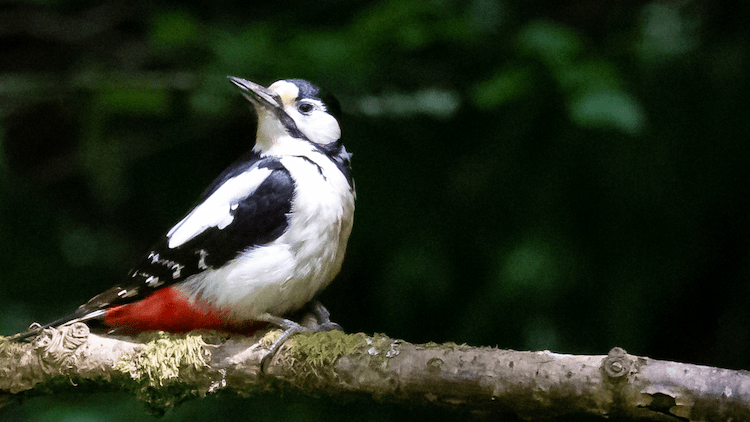
Q6 – Research shows that 80% of Ireland's wildlife species have declined since 1970, and the situation continues to worsen — how alarming is that trend?
It is an extremely alarming trend. And if the losses since 1970 have been this severe, one can only imagine the damage done in the decades before that through industrialisation and large-scale habitat change. The reality today is deeply troubling. As matters stand, a very large proportion of Ireland’s birds are now of serious conservation concern, and the crisis is still deepening.
What is especially worrying is that our baselines keep shifting. Children today are growing up with a far poorer natural world than the one I knew in the 1980s, and unless things change, that baseline will keep shrinking. The truth is, we do not even fully understand what has already been lost over the last two centuries, but we do know that Ireland now ranks among the worst countries in Europe for biodiversity loss.
For far too long, biodiversity simply was not treated as a national priority. Yet we know what is driving these losses: air pollution, intensive grassland farming, water pollution, and habitat destruction. Once the causes are known, the duty is clear; every effort must now go into restoration.
Q7 – Travelling through the countryside, hedges and trees on farmlands have been cut to the bare bones — what damage is this causing to bird populations?
I see it as causing enormous, often overlooked damage. Birds depend on trees, hedges and vegetation for shelter, nesting, feeding, and movement across the landscape. The Wildlife Acts prohibit hedge cutting between March and August, yet enforcement is far too weak, and exemptions are too readily used. For birds, intact hedgerows are like ecological corridors, essential for feeding, breeding, and raising young.
When they are flailed back or ripped out, the damage is immediate and severe, and it also leaves vegetation vulnerable to disease and decay.
At the same time, the Government is facing the prospect of paying out vast sums of public money in penalties linked to emissions and biodiversity failure. That money should be going into nature restoration instead.
Q8 – Overfishing and pollution are causing a serious decline in Ireland's seabird population — what is BirdWatch Ireland doing to address this?
This is one of our core areas of work, and we are actively engaged in protecting and restoring marine habitats. I am especially concerned about seabirds that depend on sandeels. As ocean temperatures rise, sandeels are being pushed further offshore, making the return journey to the nest increasingly difficult for species such as Puffins, Razorbills and Guillemots. At the same time, sandeels are also being commercially exploited for fertiliser and animal feed, placing even greater pressure on an already strained food source.
Through surveys and scientific research, we have identified a number of vital Marine Important Bird and Biodiversity Areas and are working to secure stronger protections for them, including legal designation. We also push hard to ensure that marine infrastructure is planned, designed, and built in a genuinely ecologically responsible way, rather than as an afterthought.
Only last week, we were in direct discussions with the Government on the urgent need to strengthen protection for Ireland’s seas and seabirds. This is not a distant or abstract issue; it is happening now, and the need for action is immediate.
Q9 – The nitrates derogation has just been extended despite worsening freshwater quality — is the Government choosing the dairy industry over nature?
Yes, very clearly it is. The Government has bowed to powerful agricultural lobby groups, rather than facing up to the reality of worsening water quality.
The extension of the nitrates derogation is damaging not just for wildlife, but for wider society, for our rivers, lakes, land, biodiversity and ultimately for people. In plain terms, it allows even more agricultural waste to enter already stressed water systems, with obvious consequences for both flora and fauna.
The Nitrates Directive was introduced for sound environmental and public interest reasons, and every effort should be made to comply with it. Instead, this extension looks like little more than another exercise in “kicking the can down the road”. At some point, Ireland will have to meet these standards properly, so it would make far more sense to begin that transition now rather than postponing the inevitable.
What makes this even more frustrating is the wider failure of national land use policy. Despite Ireland’s natural advantages, we remain heavily reliant on imports for basic produce, with extremely limited domestic horticultural production. That raises a much bigger question about how land is being used, what it is being used for, and whether current policy is serving biodiversity interests at all.
Q10 – Ireland's biodiversity is in crisis, our habitats are disappearing, our wildlife is in decline, and the warnings from your organisation and others go largely unheeded — is it simply too late to reverse the damage, or is there still genuine hope?
A great deal of harm has been done, but I remain optimistic about restoration, otherwise I would not be doing this work. I take real pride in what has been achieved in supporting the recovery of endangered species such as the Roseate Tern and the Corncrake.
BirdWatch Ireland’s membership continues to grow, more people are taking up birdwatching, and public interest in nature is clearly strengthening.
I am also proud that Ireland has recorded the largest per capita increase in participation in Spring Alive, the initiative that engages children across Europe in learning about and recording birds. Clearly, there is a strong appetite out there for engagement with and support of wildlife.
Through work with RTÉ’s Derek Mooney on the now-renowned Dawn Chorus programme each May, I have also seen firsthand the public appetite for connection with nature.
COVID reinforced that even further, reminding many people just how important the natural world is to wellbeing.
So no, it is not too late; there is still genuine reason for hope, provided that optimism is matched by action.
Eamonn Coyle is a Chartered Engineer and Chartered Environmentalist.

