

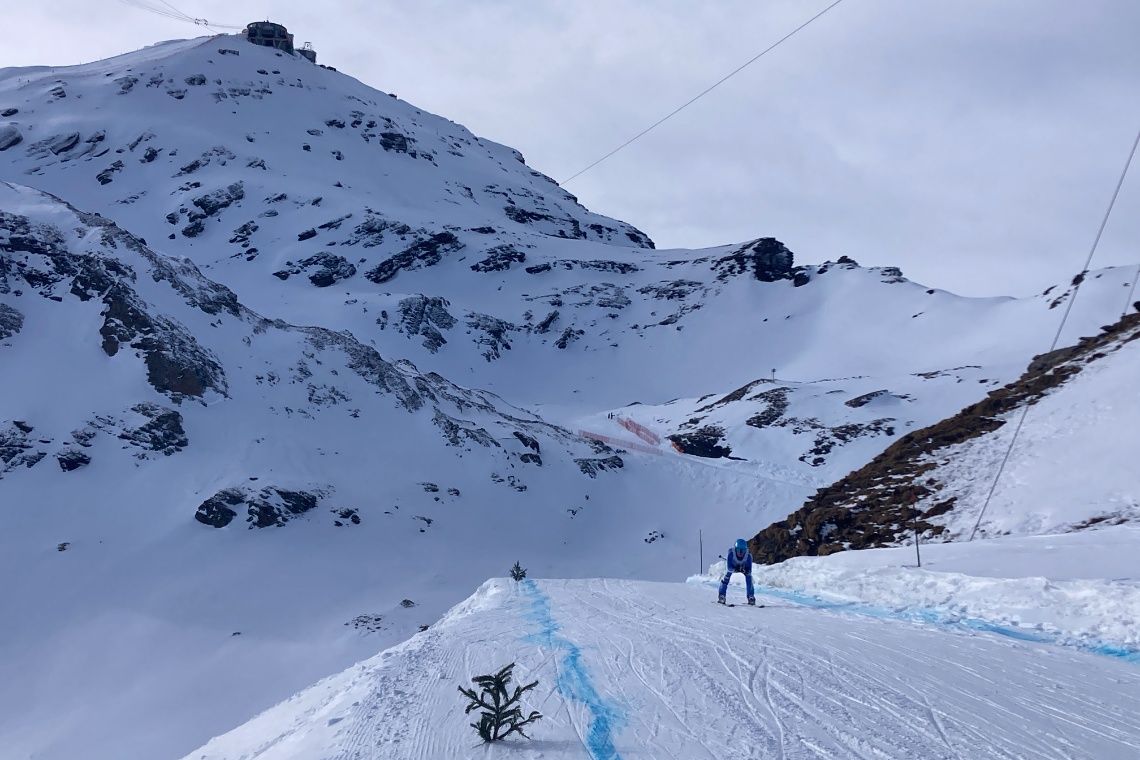
Dropping over the crest, I pick up speed, skis clattering down the hard, compact snow in my defensive Arlberg crouch. The name’s Bond - that’s the name of this run - a brusque black above Mürren in the Bernese Alps, where they filmed ‘On Her Majesty’s Secret Service’ and host the world’s longest downhill ski race.
‘Dignitas would be easier’, suggested my mate Beesley, when I told him the wife and I were travelling to Switzerland to race the Inferno. He did have a point. Just getting to Mürren involved a flight to Zurich, several trains, a bus to Stechelberg, and then the world’s steepest cable car.
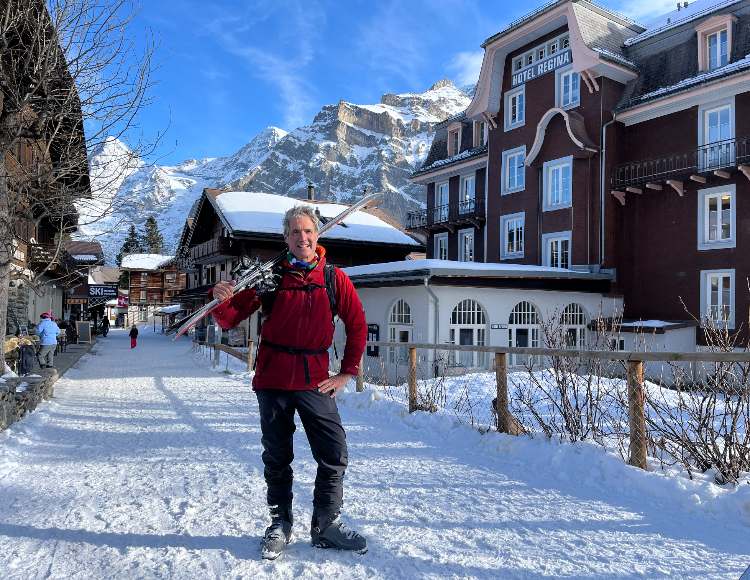
Perched on a grassy terrace at 1650m, the car-free hamlet of Mürren was refreshingly unpretentious, given its history and chocolate box views. Across the valley was the thrilling triptych of the Eiger, Mönch and Jungfrau, while rising behind was the 2970m-high Schilthorn, from where the race starts. Held each January, the Inferno guarantees fast skiing, hard partying and broken bones. And with most accommodation booked long in advance, we were lucky to find lodgings in the Hotel Regina, which offered Belle Epoque charm and antique plumbing.
Mürren owes its reputation as the cradle of ski-racing to the Lunn family, starting with Sir Henry, a visionary travel agent, who in the early 1900s organised winter holidays here for Brits, including his son, Arnold. A bronze memorial to Lunn Jnr stood beneath a fir tree, his gaze firmly fixed on the pistes. Although the first Winter Olympics were held in 1924, skiing events were limited to jumping, biathlon and cross-country. It was Sir Arnold who championed slalom and downhill racing, with a fast, ugly turn preferable to a slow, pretty one, at least according to his manual ‘Skiing in a Fortnight’, which I was urgently trying to obtain.
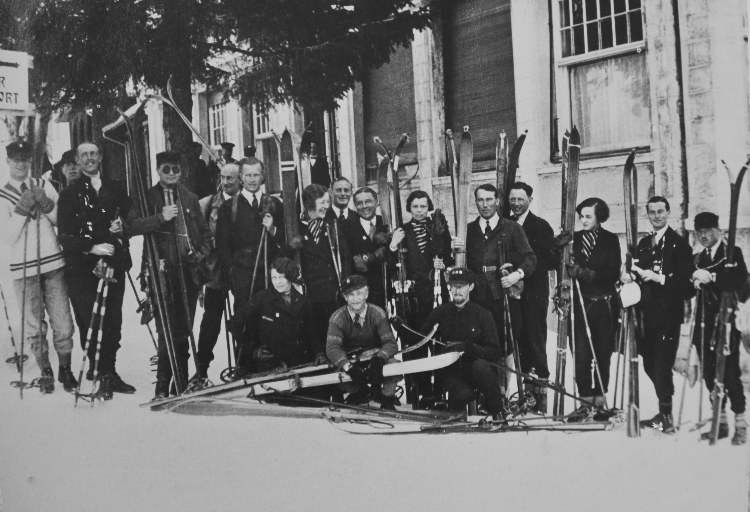
On 29th January 1928, seventeen Brits (including Sir Arnold and four women) skinned up the Schilthorn, before racing 15km down to Lauterbrunnen, in the valley below Mürren, with the winner, Harold Mitchell, taking 72 minutes. Named the Inferno due to its diabolical length and terrain, the race was organised twice more by the so-called Kandahar Ski Club before being resurrected in 1936 by the local community. Over the decades, it’s undergone significant change, including a cable car up the Schilthorn, the entire course being groomed, the field increasing to 1850, and the ‘geschmozzle’ (or mass start) being replaced by competitors setting off at 12-second intervals. Nonetheless, today’s Inferno will still test your skill, courage, stupidity and liver.
Despite 1850 starting slots, they’re hard to come by, with a large proportion reserved for prior participants and the Kandahar Club. The remainder are allocated via an over-subscribed ballot, and Fiona and I somehow squeezed in. We’d entered as the Table Mountain Ski Club, to impress the organisers, though on closer inspection our team’s credentials looked thin, given the Inferno attracts many former elite competitors. Fiona’s cousin had skied for Great Britain at two Winter Olympics but had broken her back and wasn’t available; Fiona had four Olympics to her name, but of the summer variety; and I’d been introduced to skiing at a tender age in the English Lakes and never recovered. I couldn’t rustle up anybody else.
As team captain, I went to the organisers’ office in the bowels of the Alpine Sports Centre to pick up our bibs, transponders, and start times. A woman scowled and informed me they were to be collected from the office down in Stechelberg, per the instructions I hadn’t yet read. And when Fiona sauntered in and asked where the race finished, I sensed a black mark being scored against our club. However, she did kindly arrange for our race packs to be sent up via cable car the next morning.
It seemed only fitting to visit the Kandahar Ski Club at its headquarters in the salubrious Palace Hotel. Founded in 1924 by Sir Arnold specifically to promote ski racing, the club was incongruously named after Earl Roberts of Kandahar, a victorious British general who donated a race trophy. The Kandahar occupied a spacious ground-floor lounge, with warm lighting, plush rugs and comfy chairs, from where I contemplated offering reciprocal membership with the Table Mountain Ski Club.
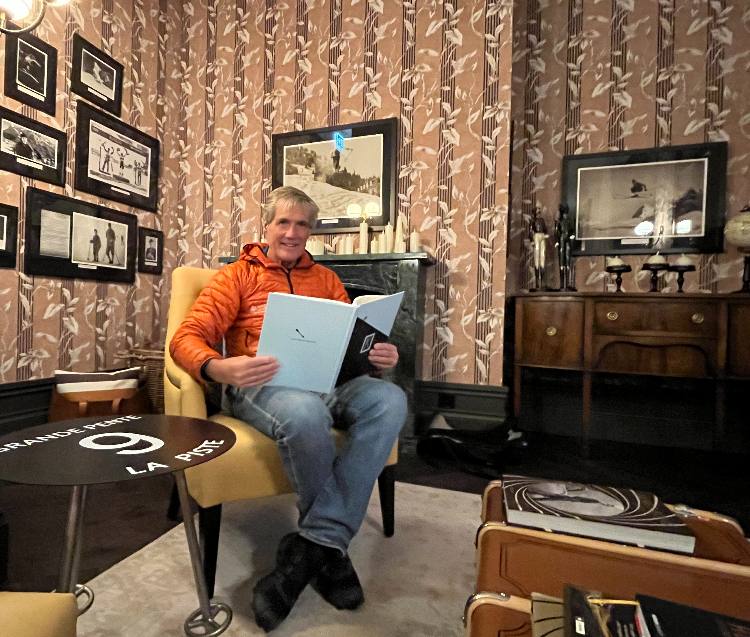
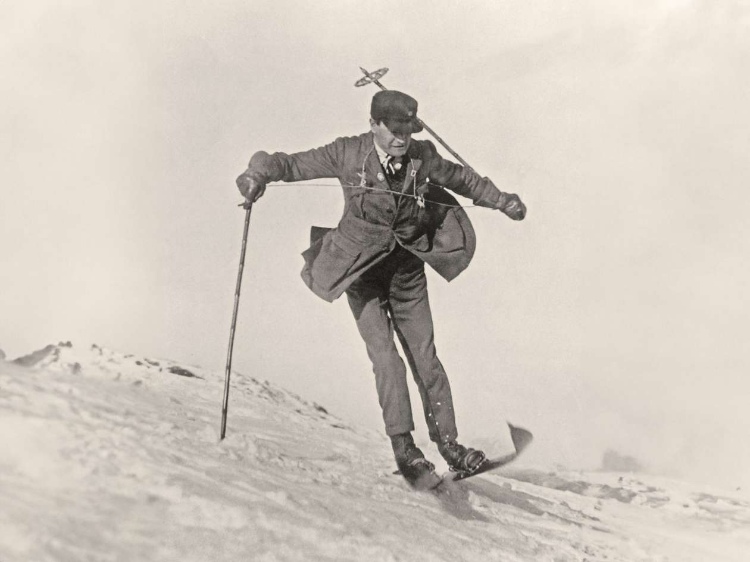
On the walls, hung photos of club alumni, including Sir Arnold in motion, immaculately dressed in jacket, tie and cap; Andrew Irvine in skis and tweeds, shortly before leaving on his ill-fated 1924 Everest expedition; and an airborne Jimmy Riddell, who won the second Inferno. Representing Great Britain in the 1936 Winter Olympics, when downhill and slalom were first included as events, Riddell crashed into a tree, ricocheted into a river, and badly injured his back.
‘Fine chap. Had the honour of knowing him,’ interjected my host, club stalwart Cleeves Palmer. In his mid-sixties, Cleeves looked a genial old buffer till he let slip he was the fastest Brit in his prime, and still finished within a few minutes of the winner. Though I didn’t secure reciprocal membership, we did crack invites to their drinks party later that evening, which only wound up when the bar ran dry. After inventing the race and winning the first three, the Kandahar lost its grip on the trophy, which is now dominated by the Swiss and Germans, who comprise over three-quarters of competitors. And whereas women made up one-quarter of the original field, that’s dropped to around 10 per cent.
The next day, being Friday, was our last chance to scope the course before Saturday’s event. Collecting necessary implements from the rental shop, the assistant apologised that there were no downhill racing skis available, but recommended Giant Slaloms for their quick edge-to-edge transitions and high speed, arcing turns. Fiona fell for this patter, whereas I insisted on short, fat resort planks.
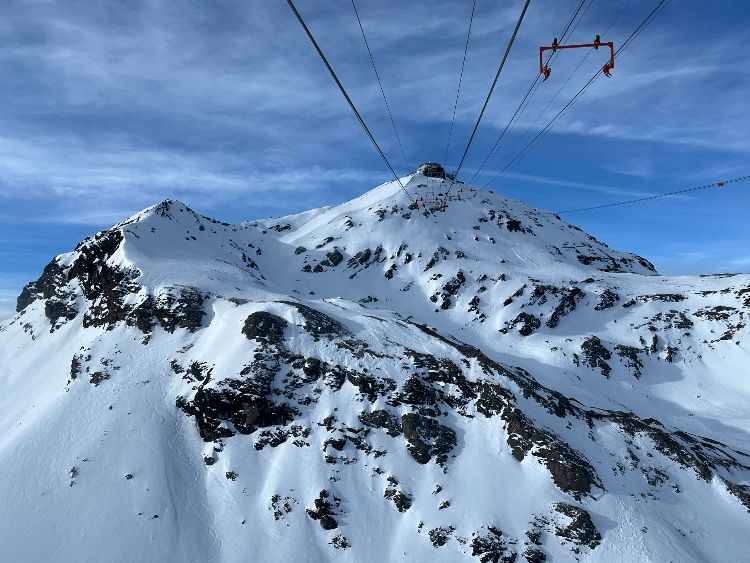
To reach the Inferno’s start, we took the cable car from Mürren up to Birg, and then a second, smaller one over to the Piz Gloria station, atop the Schilthorn. Having completed the cable car in 1967, the local promoters planned to add a revolving restaurant, but in atypically Swiss fashion, ran out of money. Film company Eon Productions funded its completion, in return for using it as the set for the sixth Bond movie, ‘On Her Majesty’s Secret Service,’ which was released in 1969.
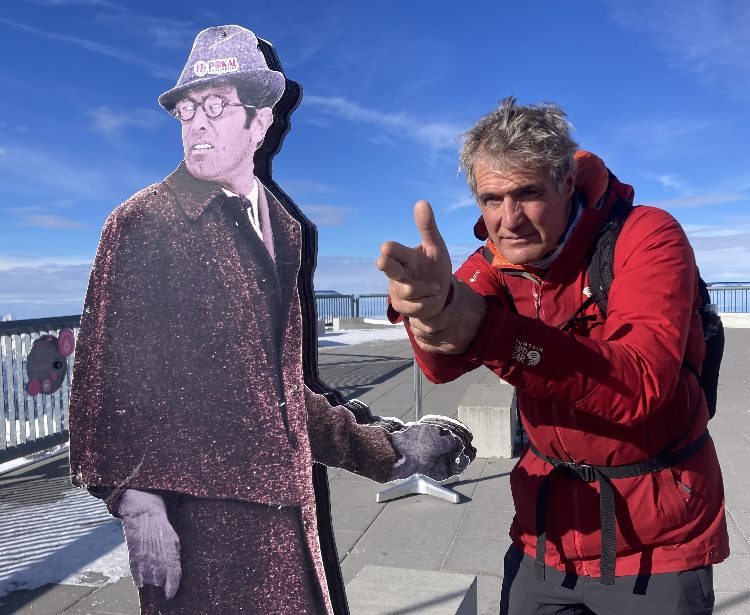
Fifty-seven years on, Piz Gloria was still milking its 007 heritage. And as a Bond buff, I duly raced round its Spy World interactive exhibition, piloting a helicopter simulator, squeezing into a bobsleigh, and demonstrating my Isosceles pistol grip. With Sean Connery having retired, Bond was played by Australian male model George Lazenby, whose only prior acting experience was in a chocolate bar advert. Offered a contract for the next seven Bond movies, Lazenby declined on the advice of his agent, who considered spy films a passing fad. ‘George was badly advised’, suggested Roger Moore, who earned US$ 25 million playing Bond in seven subsequent movies.
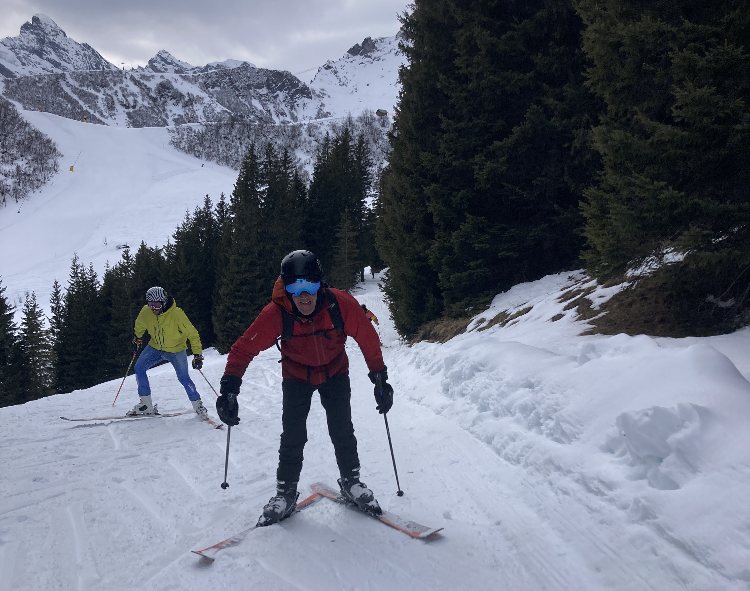
Having demonstrated my credentials to be the next Bond, it was time to inspect the course. At the foot of the escalator, automatic doors parted to reveal a steep, narrow, uninviting black run. And while 007 escaped from Piz Gloria at night on one ski, I conservatively snapped on both of mine. The Inferno’s start was several hundred metres lower down the slope, and reaching it proved challenging enough. As I sideslipped down, occasionally chancing hurried turns, Fiona performed an extravagant donut into a snowdrift.
Due to the vagaries of modern snowfall, the full 15km course down to Lauterbrunnen (at 800m) has only been possible four times in the last four decades, and this year was no exception, with the race finishing after 9.5km at Winteregg (1600m). Though a traditionalist at heart, I wasn’t too upset, and this would still be twice the length of any professional downhill race.
There were plenty of other competitors on the course, many following mentors down the optimal racing line. In preparation, I’d watched a U-tube video of stuntman Ben Collins manhandling a Range Rover down the route in summer, but it wasn’t that helpful. The Kandahar Club motto is ‘like an arrow from the archer’, implying travelling fast and straight. So, I waited all of 10 metres before executing my first braking turn.
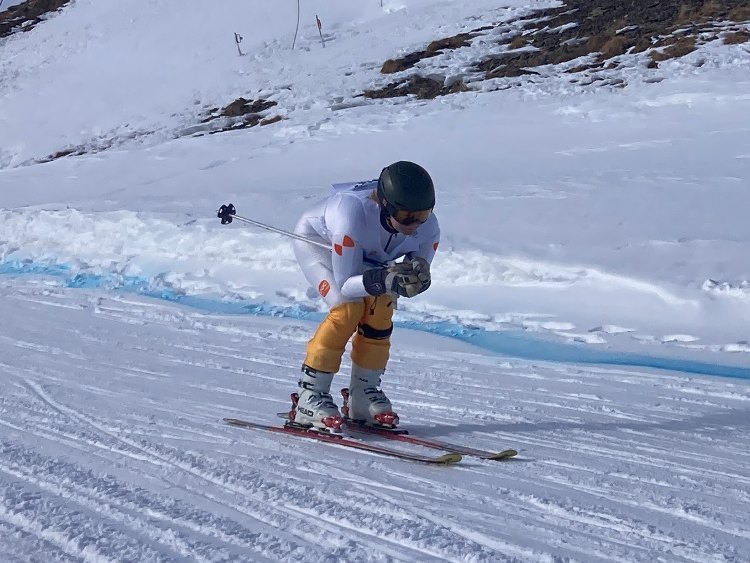
The Inferno course links several slopes via long traverses and would be relatively simple if you weren’t skiing at your limit, while fretting about being mown down. The upper section contained two long, gently angled schusses, for which you should gather as much speed as possible before tucking into an aerodynamic egg position, but my knees were aching, so I took them standing up. About halfway down was the technical crux, the Kanonenrohr or Canon Barrel, a sequence of sharp switchbacks walled with crash nets, where I doggedly hogged the apexes, ignoring comments from skiers bunched behind. And the final section swept down through pine trees towards Winteregg, where I started feeling smug, till I spotted the inflatable arch marking the Finish on top of a rise, which I staggered up like a drunken duck. Had I been aspiring for a podium place, the run should have taken me seven minutes. As it was, my goal of finishing in the top 1849 looked remote.
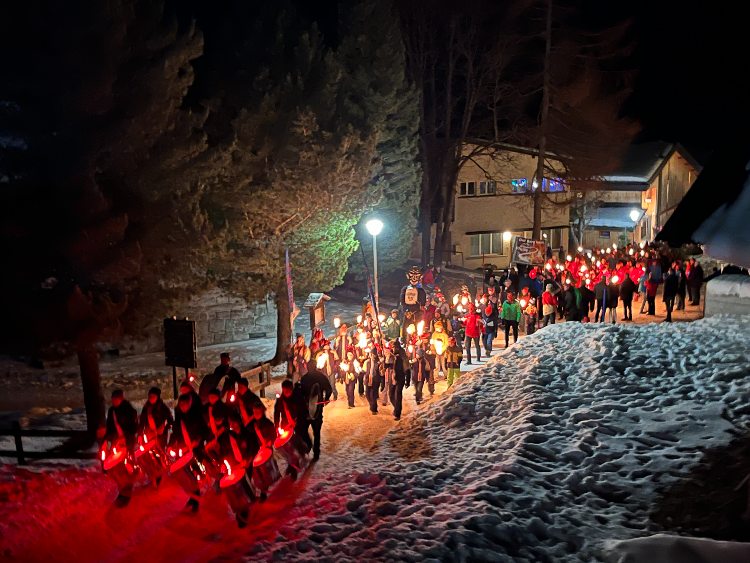
That evening we attended the traditional torchlit procession, at which an effigy of Satan, in an Inferno race bib, was dragged through the streets on a sled, pelted with snowballs, set alight and burned. According to local lore, this would ensure he didn’t meddle with the race, though I feared it might rather annoy him.
The next morning, after visiting the rental shop so Fiona could exchange her skis for a less twitchy pair, we did some practice runs off Schiltgrat, till we sensed we were pushing our luck. We’d been allocated mid-afternoon start times, near the back of the field, when the light would be flat, and the piste churned up. Boarding the cable car at 1 pm, it was clear we’d misread the dress code. While we looked prepared for an alpine yomp, our fellow racers sported catsuits and body armour.
In the cable car up from Birg, John Barry’s stirring 007 theme tune started playing in my head, but it soon became apparent that something else was odd. On the slope below, a long queue of skiers was backed up at the starting gate. And at Piz Gloria, there were so many competitors already in the station that we could barely exit the cable car.
With rumours of a 30-minute delay while a bad accident was cleared off the course, I revisited Spy World to fortify my resolve. After an hour, with half the field still to start, fresh rumours circulated that there’d been a fatality and the race was cancelled, which was casually confirmed when an elderly woman came round with a bucket collecting our transponders. By the time we skied down, the sun had dropped, casting a sombre shadow. Most skiers formed an orderly procession till basic instincts kicked in and the cortege dissembled into a helter-skelter descent, which seemed a more fitting tribute to the Kandahar Club member who had died that afternoon from a heart attack on the final slope.
The organisers announced that, following the tragic incident, the traditionally raucous post-race celebrations would be held in a modified format. At the prize-giving ceremony, the Swiss skiers were in good voice, having won 14 of the 16 trophies. In the tiny Gondel bar, a young woman was energetically dancing strapped to her snowboard. At Tächi’s nightclub, one of Sir Arnold’s grandsons was defeating allcomers at arm-wrestling. On the way back to our hotel, we were almost run over by a couple careening down the street on skis. And later that morning, in the Regina’s reception, we joined the queue of bleary guests simultaneously checking out and reserving rooms for next year. As Kandahar Club legend Jimmy Riddell wrote, ‘You do it because once you’ve tried it and taken to it, there is not any other game to compare with it in the world.’
Photos by: MATTHEW HOLT and FIONA McINTOSH
Clicking links may earn us commission. . Stock images by Depositphotos.
Welcome to Conservation Mag where we celebrate nature preservation through ecotourism and wildlife travel while we look for ways to preserve our heritage by supporting nature conservation. Starting conversations about the positive action people like you and I are taking to make a change.
