

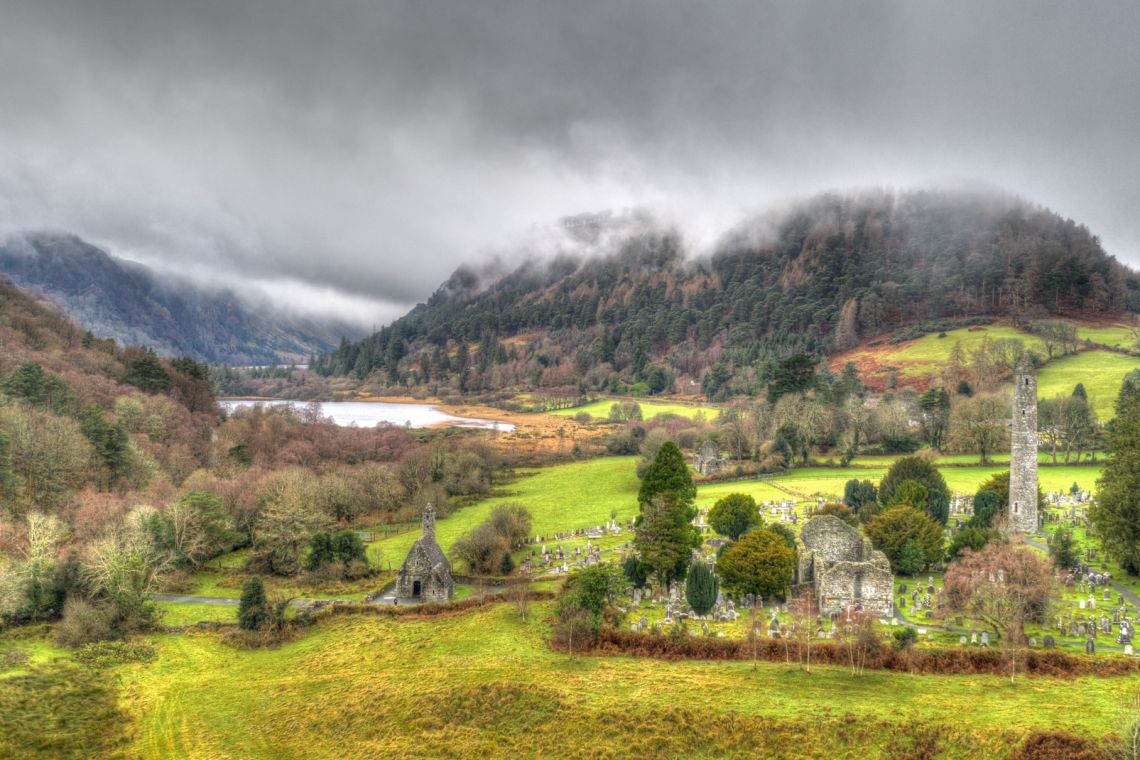
In the work that I do, I often deliver presentations on environmental sustainability. Over the last twenty years, I have encountered climate deniers and sceptics. I have even encountered people who hold the same view expressed by Trump, that climate change is "the biggest farce of the twenty first century". Others argue that the climate has always changed and refer to the ice age around ten thousand years ago, when the whole country was covered in ice.
However, to properly understand the meaning and the decline of biodiversity one must adopt a holistic approach. Looking at climate change in isolation does not provide an accurate picture of what is happening to the Earth system.
To understand the full scale of environmental degradation, scientists developed the concept of Planetary Boundaries in 2009 through research led by the Stockholm Resilience Centre. Scientists identified key Earth system processes that regulate the stability of the planet. If human activity pushes these systems beyond safe limits, the risk of large scale and potentially irreversible environmental change increases significantly.
Nine planetary boundaries define the Earth's safe operating limits.
The nine boundaries consist of: climate change, biosphere integrity, land system change, freshwater change, biogeochemical flows, ocean acidification, stratospheric ozone depletion, atmospheric aerosol loading and novel entities. Regrettably, scientific assessments show that six of these boundaries have already been seriously breached.
Taken together, these boundaries provide a scientific framework for understanding how human activity is altering the stability of the Earth system. Climate change is, therefore, only one part of a much larger environmental problem. The challenge is ensuring that economic development, agriculture, industry, and resource use operate within these planetary limits. When multiple planetary boundaries are crossed simultaneously, the resilience of the entire Earth system begins to erode, increasing the risk of large scale and potentially irreversible environmental destruction.
Recent international scientific assessments indicate that six of the nine planetary boundaries have already been breached globally. Ireland is also in a vulnerable position relative to many of these indicators.
Climate Change - January and February 2026 were among the wettest months recorded in Ireland. Severe flooding occurred in several parts of the country, including counties Wexford, Dublin, and Wicklow. Twelve months earlier, Storm Éowyn wreaked havoc across the country with wind speeds approaching 180 km per hour in some coastal areas. In 2017, large parts of Inishowen in County Donegal were swamped by intense rainfall. In June 2025 temperatures of around 30°C were recorded in the same region, unusually high for the northwest of Ireland. Climate activist Greta Thunberg often encourages doubters to ignore her and instead listen to the scientists. Climate change is now widely accepted by the scientific community as a serious and dangerous phenomenon.
Biosphere Integrity - According to the Environmental Protection Agency approximately 90% of assessed habitats in Ireland are considered to be in an unfavourable condition. Wildlife populations across Europe have declined significantly since the 1970s, and similar trends are evident in Ireland. Ireland also remains heavily dependent on fossil fuels for transport and energy. Per capita greenhouse gas emissions remain among the highest levels within the European Union.
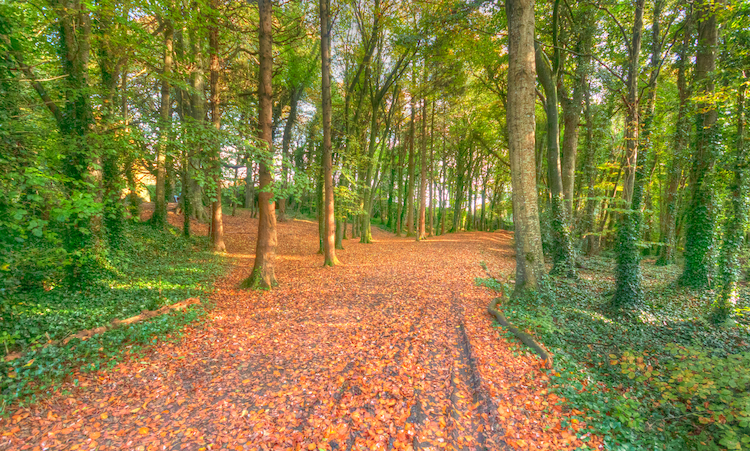
Land System Change - Around five thousand years ago, much of Ireland was covered in native woodland, with estimates suggesting forest cover of up to 80%. Today, native woodland accounts for roughly 1% of land cover. Environmentalists often criticise deforestation in the Amazon; however, Ireland's historical deforestation has also been severe. Approximately two hundred years ago, peatlands covered close to 20% of Ireland's land area. Today, that figure is closer to 12%, although significant efforts are underway to restore degraded bogs. Intensive agriculture has also led to heavy fertiliser use, which harms soil biology. Some commentators claim that global agriculture may have roughly one hundred harvests remaining if soil degradation continues. While this figure is debated, scientists agree that soil is being degraded faster than it forms. It can take over one thousand years to form just one hundred millimetres of topsoil.
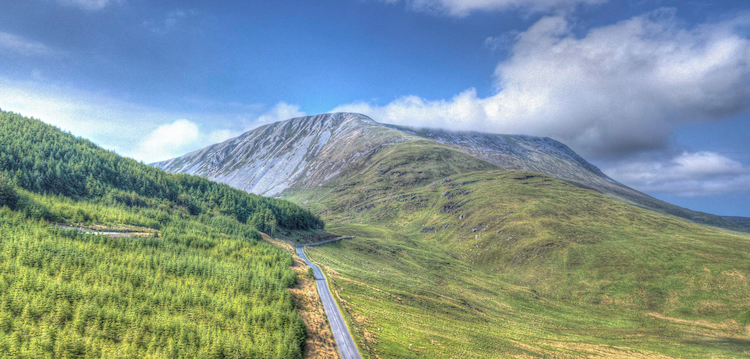
Freshwater Change and Biogeochemical Flows - Ireland is famous for its rivers and lakes. It is often said that County Cavan contains 365 lakes, one for every day of the year. That abundance of freshwater was once a defining feature of rural Irish life. Growing up in County Donegal, my friend Seamus Chundy and I regularly fished for trout, eels and salmon, and we rarely came home empty handed. Those rivers and lakes were clean, productive, and taken for granted.
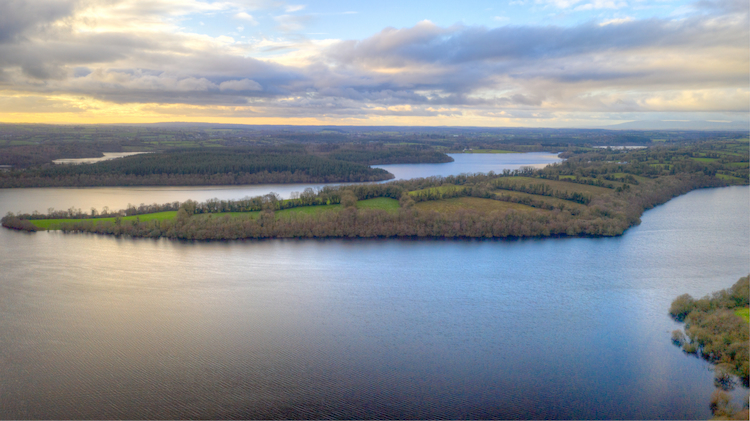
However, conditions have changed. According to recent EPA assessments, roughly half of Ireland's rivers and lakes are not meeting good ecological status. Around twenty towns and villages still discharge untreated wastewater into rivers or coastal waters, although this number is gradually declining as treatment infrastructure improves. At times the wastewater treatment plant at Ringsend has been overwhelmed during heavy rainfall and discharged diluted sewage into Dublin Bay. Agricultural fertiliser and slurry runoff from farmland also contribute to nutrient pollution. Despite these pressures, Irish farmers secured a temporary extension of the nitrates derogation under EU rules.
Ocean Acidification - Occurs when carbon dioxide released from burning fossil fuels is absorbed by the oceans. Seawater naturally dissolves CO2 from the atmosphere. When carbon dioxide mixes with water, it forms a weak acid called carbonic acid. This reaction increases hydrogen ions in seawater, lowering the pH and making the ocean more acidic. Even small chemical changes matter. The extra hydrogen ions reduce carbonate ions that marine organisms need to build shells made from calcium carbonate. Shellfish, mussels, and plankton therefore struggle to form strong shells. Around Ireland, where shellfish farming supports significant coastal livelihoods in counties like Cork, Galway and Donegal, these chemical changes pose a direct threat to marine food chains and rural coastal economies. Overfishing removes fish faster than they can reproduce, while pollution from fertilisers, sewage and plastics adds nutrients and toxins to coastal waters, disturbing marine ecosystems and reducing oxygen levels needed for marine life.
Novel Entities - Are human created substances that did not previously exist in nature or now occur at concentrations far beyond natural levels. They include plastics, synthetic chemicals, pesticides, pharmaceuticals, electronic waste, and industrial compounds. In Ireland, microplastics have been detected in rivers including the Liffey and Lee, while electronic waste from one of Europe's most digitalised economies introduces heavy metals and rare earth elements into the environment. Chemical residues from intensive agriculture and pharmaceutical manufacturing also enter water systems. Ireland is a significant global hub for pharmaceutical production, making the management of chemical discharge particularly relevant. Many of these substances persist for decades, accumulate in ecosystems, and pose long-term environmental risks.
The Planet Has Limits, and We Are Already Pushing Beyond Them.
Of the nine planetary boundaries, scientists now believe that six have been exceeded globally. The boundary relating to stratospheric ozone depletion has improved significantly due to the global ban on CFC chemicals under the Montreal Protocol. The remaining boundaries remain under increasing pressure, and in some cases, the damage is already severe.
Ireland's ecologist, Pádraic Fogarty, was once asked how he maintains positivity in the midst of such negative environmental news. He responded with the quotation, "pessimism of the intelligence, optimism of the will".
Despite the damage that has already been caused, we must aim towards a better future. We cannot continue with the business-as-usual approach of the last fifty years. Wildlife shares this planet with us and depends on the same land, water, and ecosystems for survival. For that reason, we have no entitlement to destroy their habitats, poison their water, or contaminate the landscapes that sustain them.
Eamonn Coyle is a Chartered Engineer and Chartered Environmentalist.
Clicking links may earn us commission. . Stock images by Depositphotos.
Welcome to Conservation Mag where we celebrate nature preservation through ecotourism and wildlife travel while we look for ways to preserve our heritage by supporting nature conservation. Starting conversations about the positive action people like you and I are taking to make a change.
