
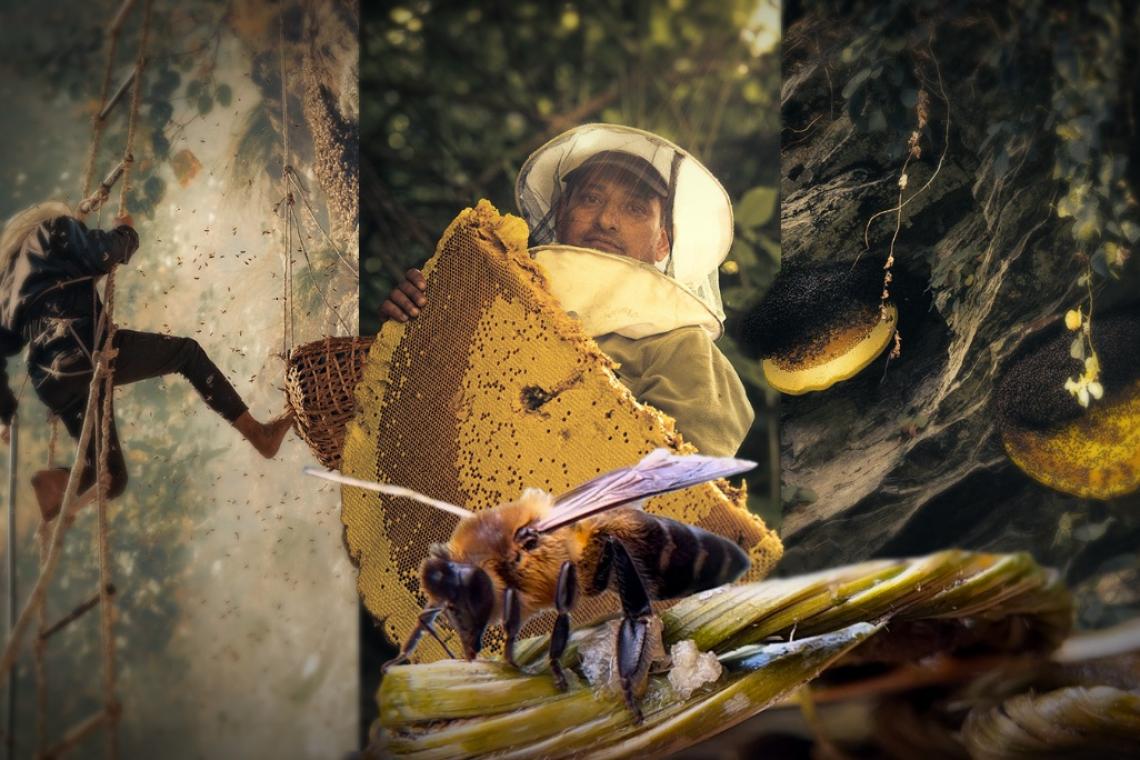
When you think of honey, what comes to mind? Something sweet on your morning toast, some natural cure to your sore throat, or maybe a jar of golden goodness at your local market. However, in the distant Nepal mountains, honey is more than just a meal. It is a lifeline, a tradition, and a teacher.
The honey-hunting tradition in Nepal is centuries old and has been handed down through generations, and the lessons that it teaches about nature, conservation, and human endurance go well beyond the jar.
The Art and Risk of Honey Hunting
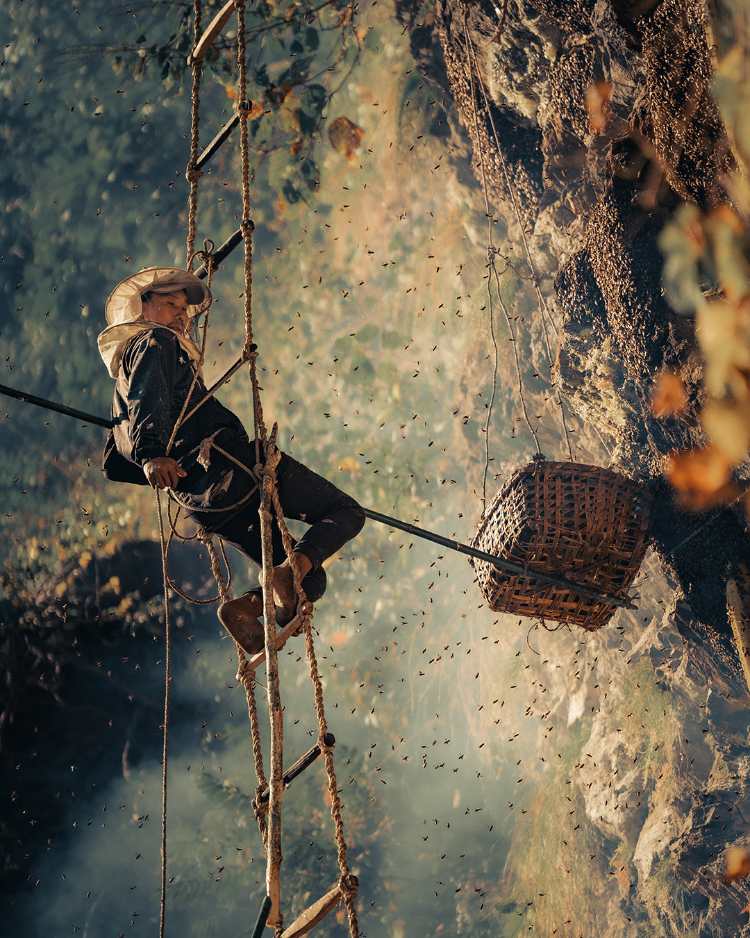
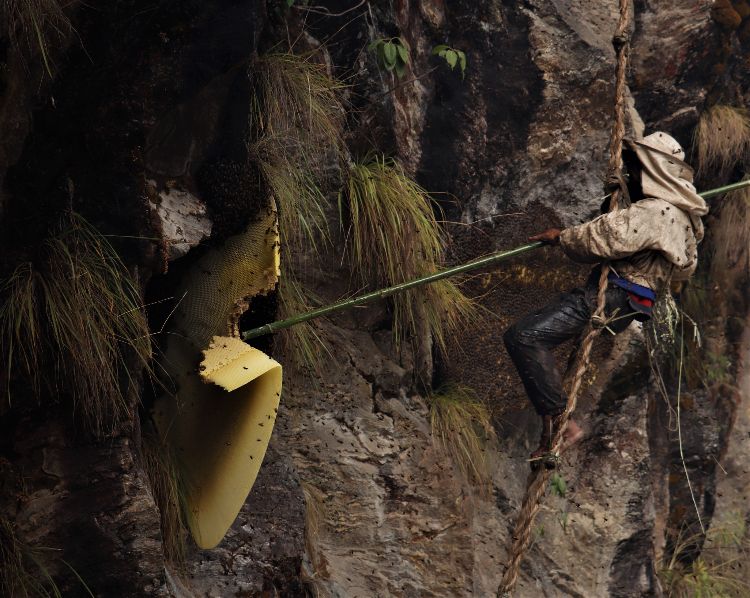
Honey hunting is not an ordinary practice in Nepal. The hunters typically descend hundreds of meters down the cliff faces using ropes and bamboo ladders. These bees are not typical honeybees. The Himalayan giant honeybee (Apis laboriosa) is a species that is described by its size, strength, and huge nests, which can contain over 60 kilograms of honey.
It takes unbelievable ability and patience. Hunters should learn when to climb, how to smoke the bees to get them to calm down, and how to harvest without killing the nest. A misstep can be fatal.
However, in addition to the excitement and the risk, honey hunting also teaches us to appreciate nature more. Hunters understand when to hunt, when to be silent, and when to be on the alert. Over-harvesting can destroy a colony, leaving the bees vulnerable to predators and the surrounding ecosystem. This is the first conservation lesson; people must not take what nature can offer without endangering it.
Knowledge Passed Through Generations
Honey hunting is not merely an art; it is a culture that is transmitted across generations. Young hunters are taught by the elders about the behavior of bees, seasonal cycles, and ecological variations. They also get to know which cliffs are safe, how to defend themselves, and which colonies not to touch so that they can harvest later.
This conversation is vital in this transfer of knowledge. The traditional practices are usually a reflection of the knowledge of the local ecosystem. In Nepal, hunters do not always take all the honey. They do not leave too little so that the bees can survive the severe winters in the Himalayas. This demonstrates one of the principles that conservationists of the modern world underline: sustainable harvesting guarantees the existence of species and the ecosystem relying on them.
A Tradition Rooted in Respect for Nature
The Nepalese honey hunting is centered on the reverence for nature. Hunters understand that excessive harvesting of honey may cause the bees to die and endanger their own lives in the future. They do not kill all the honey, leaving the bees to live through the winter, not to kill the hives, and only harvest at specific times of the year. This human need and ecological health balance is a pre-modern conservation, proving that sustainable practices are not a new concept; they have been a part of traditional knowledge since ancient times.
To a large extent, this method questions the tendency of modern society to overuse natural resources. Nepalese honey hunters believe in long life, whereas industrial agriculture tends to focus on large production. Their approaches teach us that being sustainable means being patient, observant, and respectful, rather than being fast and profitable.
Lessons in Biodiversity
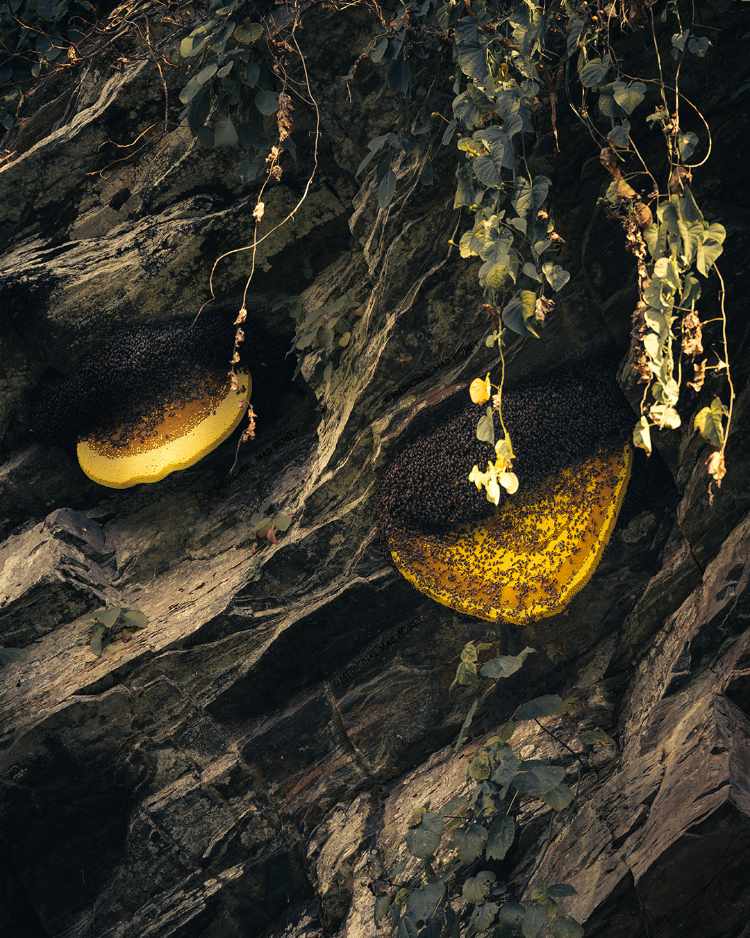
Himalayan cliffs are not only a habitat to honey hunting, but also a thriving ecosystem. These bees nest in the forests and cliffs, and they are the habitat of millions of plant, bird, and insect species. Honey hunters are also conserving this fragile ecosystem by conserving the bees and their hives.
This is one of the lessons we should learn. Bees are pollinators, i.e., they help plants to multiply. Without them, most flowering crops and plants would perish. These communities also help in biodiversity in the sense that they tend to honey harvests and this goes to show that conservation is not only about the protection of a certain species, but the nurturing of the web of life.
Conservation Through Community
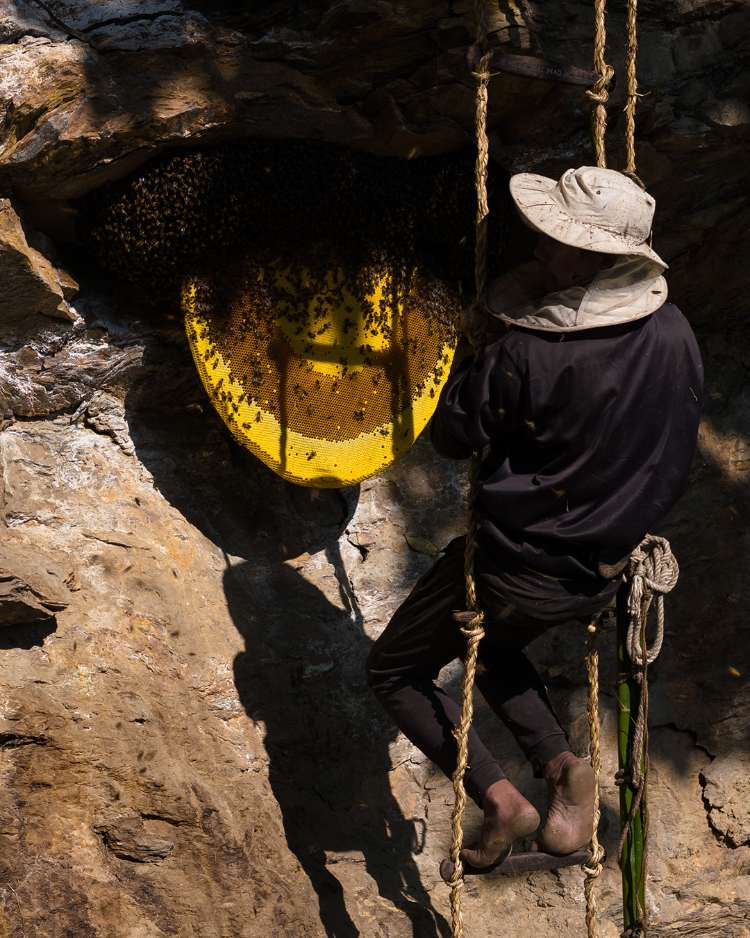
Modern scientists have been interested in the honey-hunting activities in Nepal. Those scientists who have been researching Apis laboriosa are surprised at how these communities understand the behavior of the bees, their migration, and nesting preferences. This knowledge is critical in the research of the high-altitude ecosystems and the conservation of the pollinators worldwide.
Moreover, even the honey itself has some special properties. Himalayan honey is said to possess medicinal qualities, including antibacterial qualities, and in some cases mild psychoactive qualities due to grayanotoxins in some wild honey. These toxins come from the pollen of Rhododendron species' nectar and have to be looked out for. Thus, the hunters select the honey carefully, and this is what keeps these unique features intact, which connects the cultural practice and the biological science.
Honey Hunting and Climate Change
Himalaya is among the regions that have been highly susceptible to climate change. Warmer temperatures, the change in rainfall patterns, and deforestation of the nesting sites and flowering plants may affect the bees. Honey hunters have witnessed these changes over the years, and they have been in a position to adapt their activities by moving to new areas or altering the time of the harvests.
They are the first warning systems of ecological changes by watching the bees and the environment closely. Their indigenous knowledge can be of great help to scientists who research climate change, as it demonstrates that local communities, such as the Gurung communities in Nepal, can be very important in monitoring and adapting to the environment.
The Risks and Rewards
Honey hunting is not a safe business. The hunters are exposed to physical danger of cliffs and stings, and economic danger in case a season is not fruitful in honey. However, this threat has formed a culture of respect, planning and boldness. It educates us that conservation is frequently a personal investment and responsibility. The better we know and admire the natural world, the more we are ready to save it, even at our own expense.
Lessons for the Modern World
Nepal’s honey-hunting tradition offers several lessons that are relevant far beyond the Himalayan cliffs:
- Sustainability over short-term gain: Taking only what is needed ensures resources are available for future generations.
- Respect for all life forms: Protecting one species, like bees, can safeguard entire ecosystems.
- Community-based management: Conservation is most effective when local people are involved and empowered.
- Blending traditional knowledge with science: Ancient practices often contain wisdom that complements modern research.
- Observation and patience: True understanding of nature comes from careful observation over time.
Such lessons are particularly significant because the world is experiencing environmental problems. It could be overfishing, deforestation, or even a reduction in the population of pollinators, but the values inherent in Nepalese honey hunting can inform better and more successful conservation efforts across the globe.
Preserving a Cultural Heritage
In addition to the ecological and scientific education, honey hunting is a cultural gem. The harvest is surrounded by festivals, rituals, and oral traditions that combine community identity, spiritual beliefs, and environmental stewardship. Conservation of such practices implies conservation of cultural diversity as well as biological diversity. The culture and the environment suffer when honey hunters disappear or the traditional knowledge is lost.
Current organizations operating in Nepal are seeking to empower honey hunters by training, providing safety gear, and implementing fair trade programs. This will help ensure that the practice remains economically viable while also protecting bees and their habitats. The global community can contribute to such efforts by supporting them in order to have culturally sensitive and locally led conservation.
Conclusion: More Than Sweetness
The honey hunting practice in Nepal teaches us that conservation is not a law or technology; it is a relationship. It is concerned with the way man interacts with nature, the way we appreciate other species, and the way we impart knowledge to the next generation. The honey is sweet, yes, but the teachings it brings are even richer.
It is not only about the honey, but a model of sustainable living: one that does not overindulge human needs at the expense of ecological health, respects the knowledge of the community, and the fine threads that weave all life together. In a world where there are environmental crises, the Nepal cliffs provide a simple and deep truth: the most ancient traditions may also have the latest lessons to offer to our planet.
This article is brought to you in partnership with Medicinal Mad Honey.

