
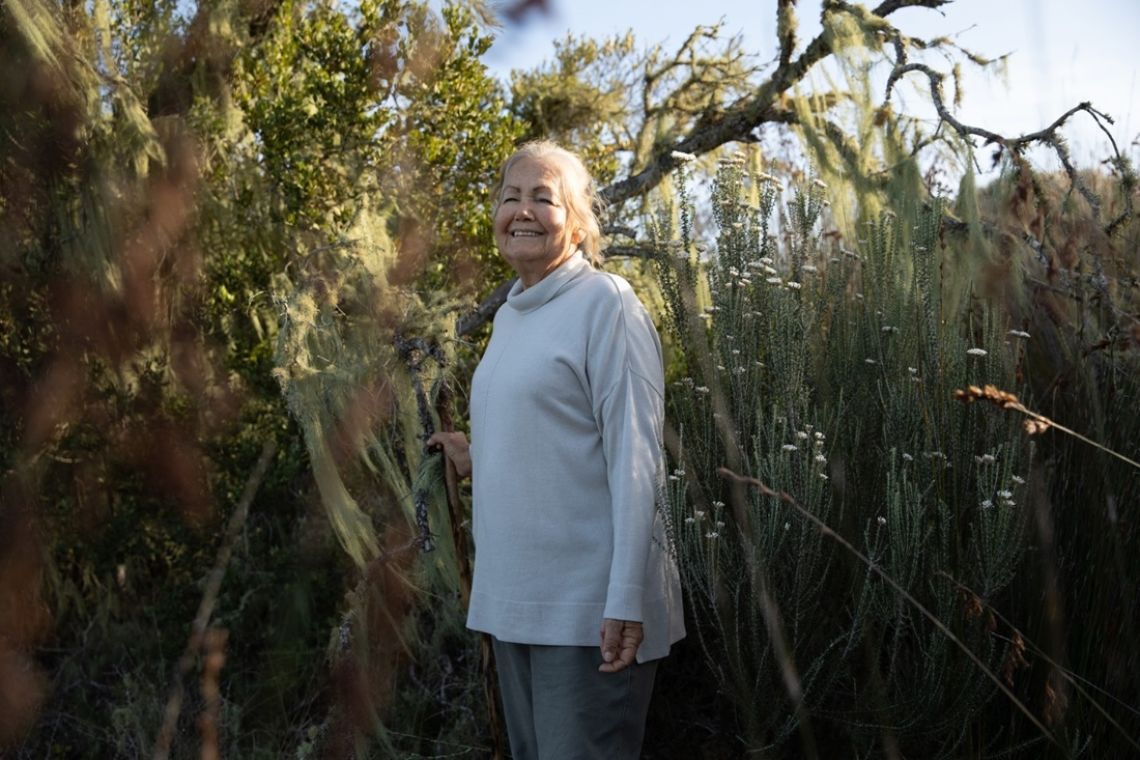
In the final conversation of the Women Who Keep the Wild Alive series, Gill Simpson brings the focus from botanical conservation to wildlife rescue, habitat protection and the wider relationship between people and nature. Her journey from teaching and advertising to establishing Wild Rescue reflects many of the themes running through the preceding interviews: the importance of practical action, the need to protect entire ecosystems, and the conviction that conservation must include people as well as every part of biodiversity.
Gill Simpson - Founder & Director: Wild Rescue - ‘A South African Jane Goodall’
Gill Simpson directs the Wild Rescue nature reserve near Riversdale in the Western Cape. Now in her early 70s, both a teacher and marketer, she enjoyed a successful career as a senior strategist and manager in the advertising industry whilst continuously being involved with NPOs for wildlife and animal rights. She speaks plainly on having invested her whole life savings into conservation.
“When I started Wild Rescue, I wanted to actually rescue baboons. Having come directly from the Jane Goodall Institute / Chimp Eden in Mpumalanga, I was inspired by Dr Goodall and realised how immensely important habitats and ecosystems are, and how these are inarguably linked to the conservation of larger animal species,” she began.
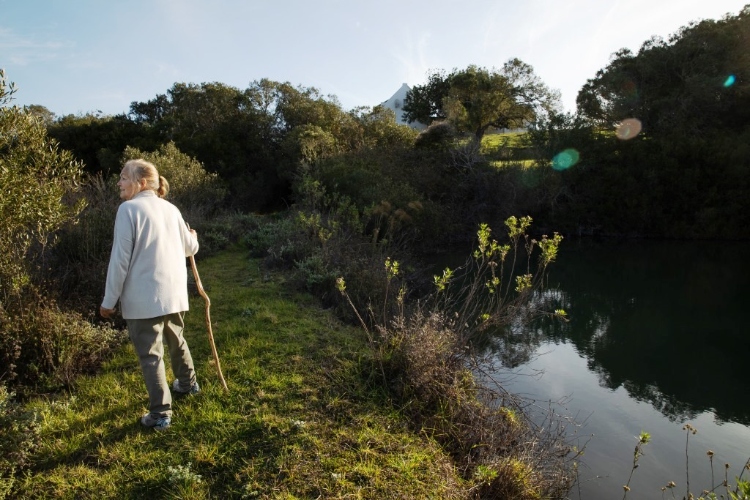
“Originally, I set out to buy a piece of land on which to start a primate rehabilitation centre and sanctuary; however, the best property I saw around Cape Town and the area was this particular property which happened to be a nature reserve. I met the owner, Hannes Zaaiman, who realised I appreciated the fynbos biodiversity, though I had little actual knowledge about it. Unfortunately, Hannes passed away during the interim when I left to come back to him with an offer of purchase, but it was accepted by his estate as they were mindful of leaving the place in good hands. That is how I came to be the custodian of a private nature reserve of 165 hectares in the hills of Hessequa, and I feel very privileged to be here.”
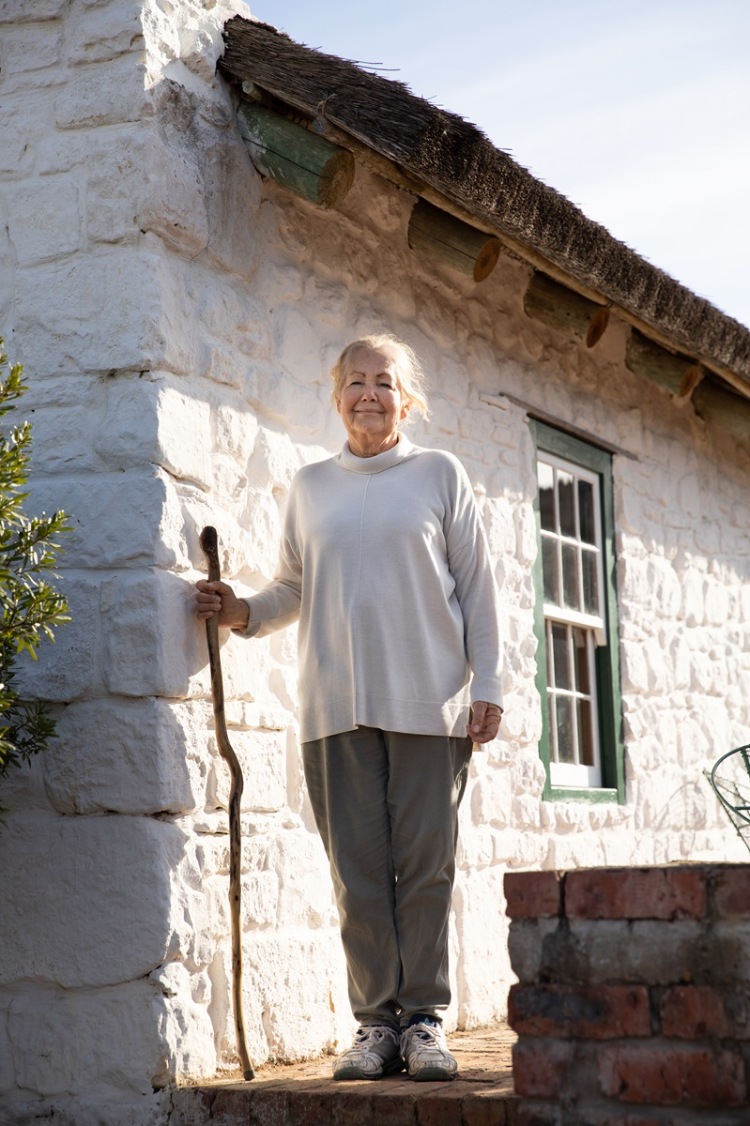
Gill continued, “A nature reserve belongs to everyone and everything, not an individual or to people. Our area is amazing in its biodiversity, from fungi to birds and mammals - the more you learn, the more you realise how inter-connected things are - way beyond just fauna, which is my great love. After 10 years on site we are still battling to open up the rehabilitation centre due to the costs involved - such as construction, medical equipment, permitting and compliance with regulations by CapeNature. Currently, in our sanctuary we have 29 leopard tortoises and 2 vervet monkeys who have all been saved from certain death, but the main objective is to rehabilitate and release wild animals back into nature, and only in saving wild places and habitats can we make this happen and retain our biodiversity.”
Speaking about her journey towards becoming a steward of a nature reserve, she said, “I have always been very interested in wildlife; however, in the 1970s I travelled through Africa and was not aware at the time that buying ivory was wrong. When I returned home, I became a lot more conscious of issues around poaching and habitat loss. Then I was doing my teaching degree and decided to teach geography and business economics as a means to influence environmental matters. I finished my postgraduate degree in marketing management while working as a receptionist in advertising and was offered a job in marketing and communication. During that time, I worked with big creative agencies and eventually the prized Shoprite account. While it was highly stressful, the money did enable me to buy a nature reserve.”
She continued, “I got onto the path of working with wild animals, serving on the board of Beauty Without Cruelty for 20 years, encountering these laboratory animals as they were trapped and experimented on. I also went as a volunteer to the Barrydale Baboon Sanctuary, working with Dr Peter Fraser and his wife, Nola Fraser. However, it was only when I went to a Jane Goodall talk at Kirstenbosch with Baboon Matters that I decided to volunteer at the Jane Goodall Institute near Nelspruit, and it was only because of that experience that I ever thought that I could possibly start a sanctuary in the Western Cape - where there was and still is desperate need for such facilities.”
Expanding on ideas about conservation, Gill said, “It has to involve biodiversity and habitats, and it has to involve people. Nature conservation is very much about teaching people awareness of the value of biodiversity and how precious all the elements are - right down to the plants, insects, and microbes. Shifting toward plant-based diets will help prevent biodiversity loss by drastically reducing resources needed for agriculture and greenhouse gas emissions, allowing natural habitats to recover and protecting wildlife. Commercial farming, with its heavy use of chemical fertilisers and pesticides, needs to change to more sustainable models. There is hope, but we cannot continue on the trajectory we are on now.”
“South Africa does not give enough importance to conservation. We allow economic motivations to override both scientific findings and indigenous knowledge. The environment needs more protection, not less - and so do animals. Conservation is an underfunded sector, and we know that the future of every country is dependent on limiting climate change. South Africa does have beautiful parks, but there isn’t enough follow-through with people who break the law, such as with poaching. We have such rich biodiversity in every single province, which is enviable, and it is one of our most precious assets.”
“In South Africa we need to give more priority to the animals and other constituents of our biodiversity which are not just the ‘big five’ charismatic species, and care about the fact that there are also other species that will become endangered unless we take action now. If we continue without acknowledging every animal, bird, and plant, almost every species will become endangered or lost unless we recognise their value. There is a lot of red tape involved in doing conservation work with little to no financial aid. Regulations need to be enforced and implementable,” she listed. “Everyone has a right in our constitution to a healthy environment, and therefore the protection of the environment is also for the sake and benefit of people.”
Commenting on women in conservation, she exclaimed, “Come! We need you!” Continuing, “Nature conservation is an area where women can progress and where women should get involved, particularly since they can have the nurturing side as well as a scientific approach. Anyone interested in entering this field should volunteer with an existing organisation and become involved.
You can make a difference. We need people to go out - pick up litter, remove alien plants, form organisations to protect animals; we need people to make a positive difference, no matter how small. Women are in a special position to give their children an awareness of the broader aspects of the environment and let them experience it. Nature is reality - it is a lifestyle, it’s a cycle, and you need to be a part of that. Children should also be a part of that and be allowed to get their hands dirty and learn.”
Concluding on changes she would like to see within her lifetime, Gill added, “I would like hunting to be banned, as I’m against trophy hunting. It gives people the impression that they are separate from and superior to the environment. That they are better than the animals that they harvest as trophies. It’s a total sign of disrespect and disregard for how we are all part of nature. We all come from the earth, and without it we cannot live. We need better recognition of all animal rights and get people back in touch with nature. Nature is an inter-linked chain rich with biodiversity; if we allow species to become extinct, we are taking away our own heritage; they are a part of us, and a part of the same mosaic of life.”
Taken together, these five conversations tell a much larger story: Conservation is not one job, one organisation or one approach. It is water protection, habitat restoration, botanical research, community engagement, wildlife rescue, and the daily decisions that determine whether natural systems survive. The women featured here show that meaningful conservation can begin with a scientific career, a business background, a love of plants, a fascination with wildlife or simply the decision to act when something needs protecting.

