
Conversations with women leading conservation in South Africa - protecting our natural heritage and refusing to give up on nature.
In this five-part feature, we meet women whose paths into conservation could hardly be more different: Aileen Anderson, Linda Fletcher, Christina Mars, Naomi van Schalkwyk, and Gill Simpson. Some built careers in science and environmental management, while others brought skills from business, education and communications into a lifelong commitment to nature. What connects them is a conviction that conservation is not simply about protecting beautiful places or individual species. It is about people, communities, future generations and the living systems on which we depend.
In the first conversation, Aileen Anderson of the Grootvadersbosch Conservancy explains why water became the thread running through her career, how practical experience can matter as much as academic qualifications, and why conservation needs to be understood as a long-term investment in both nature and rural communities.
Aileen Anderson - Grootvadersbosch Conservancy: General Manager - ‘Water Warrior’
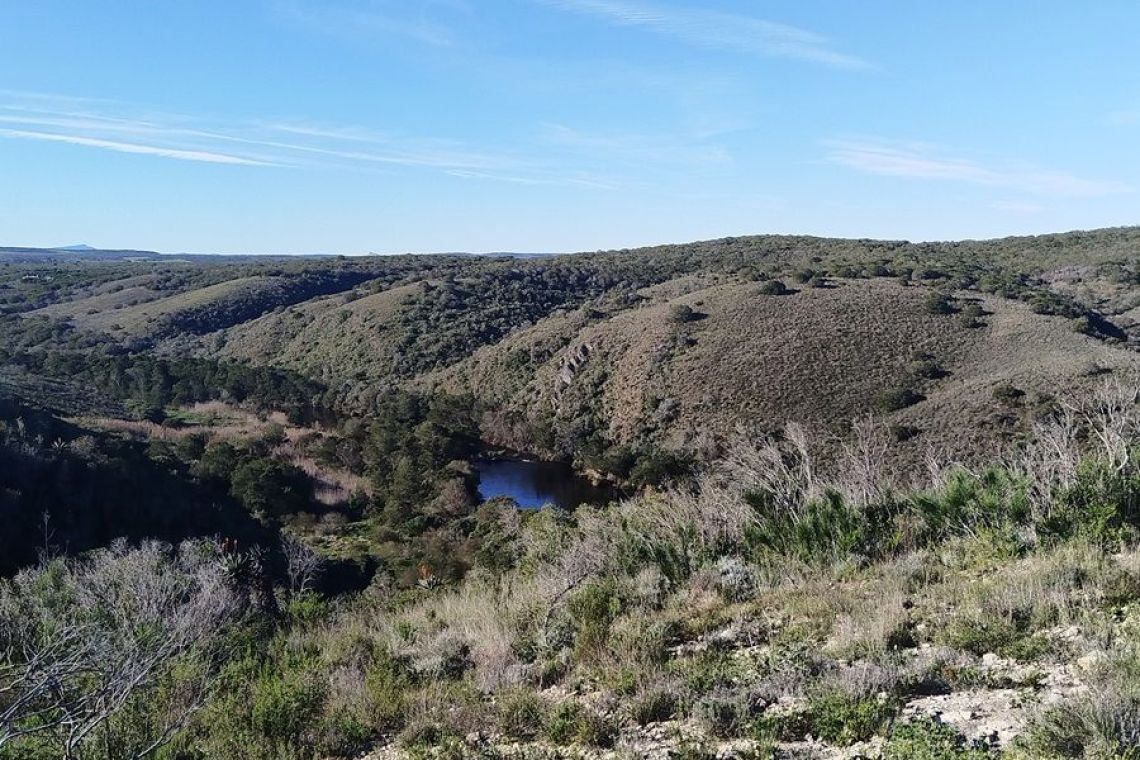
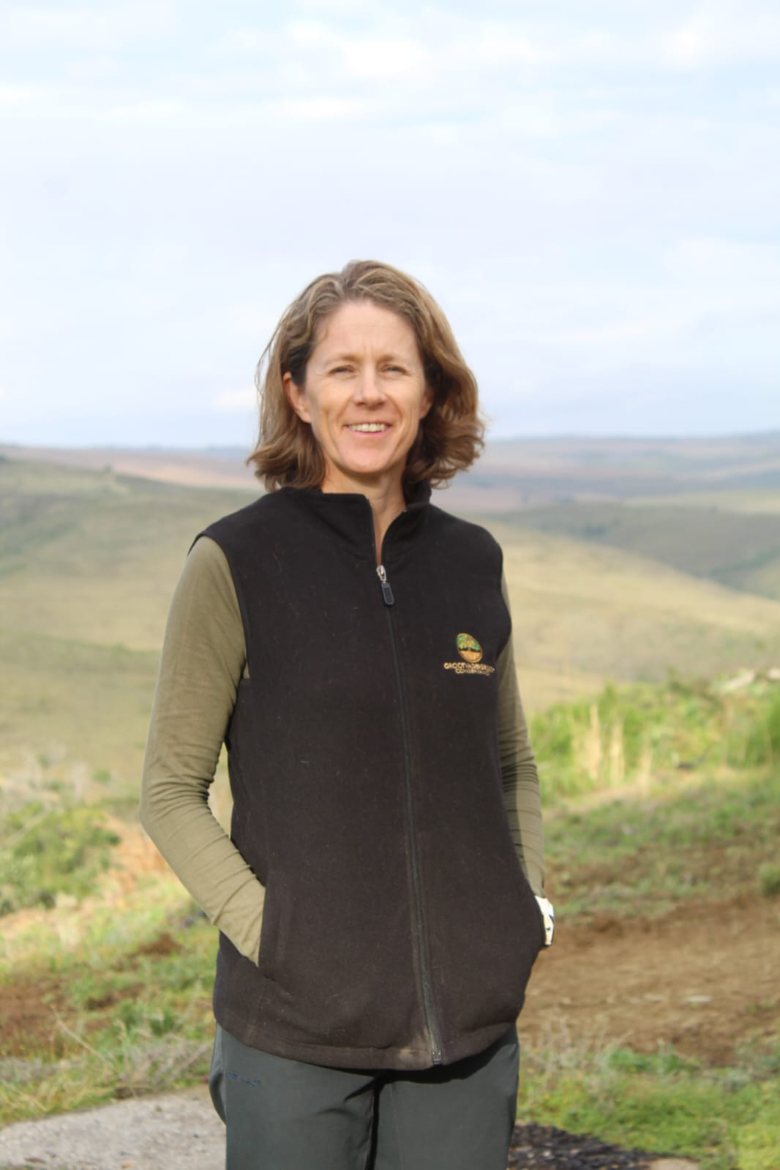
Aileen Anderson leads the Grootvadersbosch Conservancy [GVB], a non-profit trust between Heidelberg and Suurbraak - protecting approximately 25,000 hectares of critically endangered flora, mountain catchments, and patches of indigenous forest along the Langeberg Mountains near Swellendam in the Western Cape. A Chartered Environmentalist and a member of the Chartered Institution of Water and Environmental Management, she has over 25 years of experience in the water sector in Southern Africa and is currently managing a project which employs over 120 people in rural areas through the restoration of watersheds. Grootvadersbosch is literally translated as Big Father’s Trees - named after Roelof Oelofse, the owner of the land in the 1700s, who was known as ‘groot vader’ (big father) in the community. Before this conservancy formed, its natural areas were threatened by agricultural expansion, overgrazing and poor fire management.
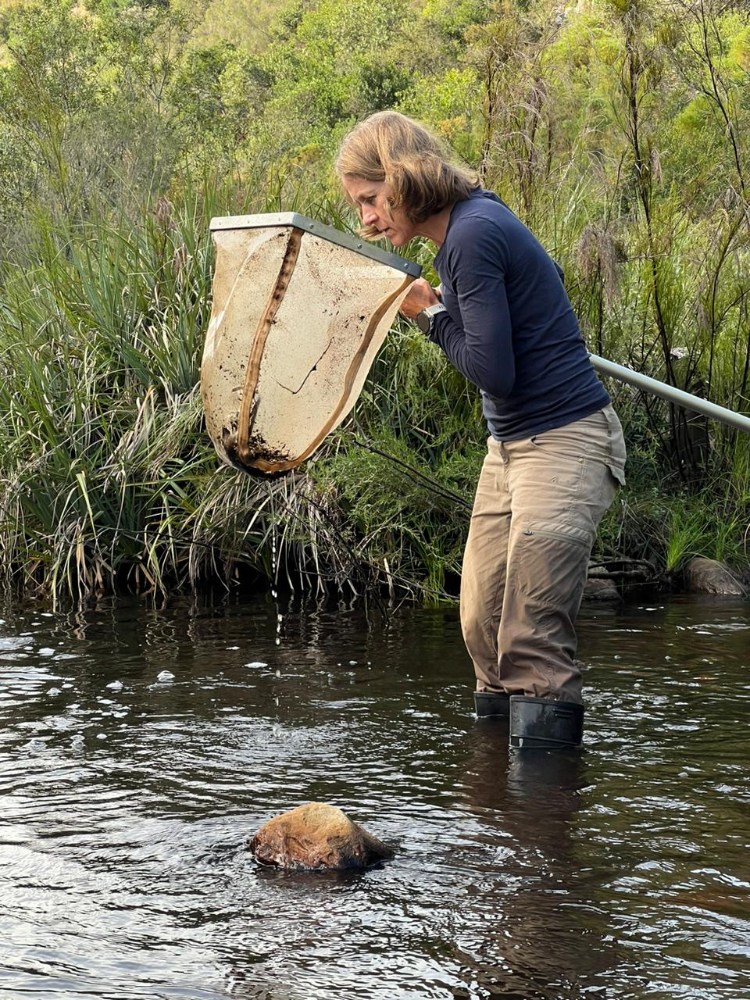
Having studied at the University of Cape Town, the University of British Columbia and the London School of Economics; put together her enviable ‘letter soup’ of credentials (MCIWEM C.WEM CEnv), forming a recognised gold standard for specialists in water and environmental management. Despite her academic prestige, she modestly insists that she’s learned much more from people on the ground and that her presence and involvement in doing the hard physical work of clearing invasive alien plant species has taught her a lot about the job.
As the General Manager at GVB, Aileen has oversight over the whole organisation and its projects, with fundraising and writing proposals being a significant part of her duties. On average she has around six to eight contractors that are kept busy with alien species clearing work such as the removal of black wattle, blackwood and pine that grow aggressively in the region - including running smaller conservation projects such as an indigenous restoration nursery, environmental education and river restoration, “with the support of an amazing team of 10 staff,” as she took care to emphasise the value of team effort.
When asked what drew her to studying water resource management, she said, “All my life I've been interested in water. I like to see things from different perspectives, and water cuts across various disciplines - such as legal, social and economics - as it does landscapes. What I have found the most interesting is that while we focus on protecting rivers and ecosystems, we have also worked with people in the agricultural sector who may not appear to be conservation-minded, but who change their perspectives once you start talking about water. When the future of your farm depends on the flow of a river, it reifies conservation as a material necessity. While there is a tension between agriculture and biodiversity conservation, at heart the long-standing farmers really do care about their soil and their land, and their dependence on nature - as opposed to others who just pretend to care and merely talk-the-talk.”
“Many of the farmers around the conservancy are there because they care,” says Aileen, with her mother’s side of the family farming locally for five or six generations. While she didn’t grow up around GVB, she has been visiting all her life, nurturing her insights on the region. She notes that one of the greatest challenges of conservation is that you need to be thinking in decades, not months or a few years, to make a difference. “It’s also important to look back at how far you have progressed. When you start doing alien clearing, you inevitably just see the alien plants instead of the natural flora, and sometimes I have to stop and remind myself how much worse it looked when I was growing up and when my father began clearing wattle 20 years ago,” she shared.
Aileen advocates for the value of getting work experience before pursuing academia: “Conservation is not learned in a textbook. When looking for a new team member, I prefer to interview someone who has life experience rather than someone with a Master's degree or a PhD. If you are going into practical conservation, the academic background helps, but first-hand work is indispensable. It doesn’t need to be in conservation; I’m more interested in individuals who - for example - have been waitressing or running a bar, working with people and money, and building real life skills. Those are the stories I want to hear during an interview.”
Addressing women seeking to enter conservation work, Aileen commented, “I think sometimes we create barriers for ourselves by self-doubt and belittling our own gender, instead of accepting that those barriers shouldn’t be there to begin with. Women are capable of doing anything we set our minds to. In my work, I treat students equally, from climbing up mountains to operating chainsaws, giving everyone the same opportunity, not presuming one is weaker than the other, and supporting them in what they are passionate about.”
Touching on the efficacy of nature conservation in South Africa, Aileen opined that as government organisations struggle to fulfil their roles and mandates due to low funding, NGOs are increasingly coming together to solve problems with synergies between organisations to take on challenges - creating employment and opportunities in areas linked to conservation, giving pride in protecting the environment and educating the next generation. “Whereas in previous years conservation was seen as elitist and fenced off, today we are seeing better integration into rural communities and agricultural operations,” Aileen noted.
“The government can help by focussing on creating an enabling environment for conservation organisations by improving the efficiency of permitting processes and providing scientific support, making the work that we do easier. Many agencies focus on tourism because they lack funding. On its face, it seems like a good idea because it brings in money, but it also comes with costs, and then the emphasis is on the touristy areas that look visually appealing to travellers - not necessarily on other important conservation priorities that are less visible,” she added.
“We need to protect the natural environment, not just because it looks lovely, but because we are heavily reliant on what nature provides. It's not just about having beautiful places; the work that we as conservationists do is about protecting communities, future food sources and water sources - all intertwined inseparably with the natural environment,” Aileen concluded.
Aileen’s story leaves us with a simple but important lesson: conservation is ultimately about much more than scenery. It is about the ecological systems that sustain communities, farms and future generations. Her emphasis on practical experience, partnerships and long-term thinking sets the tone for the conversations that follow: protecting nature requires people with different skills working together, and it requires us to value the benefits that healthy ecosystems provide every day.

