A Unique Idea that Worked to Bring Them Home
Almost extinct by the 1970s, Maine’s puffin population on several coastal islands made a dramatic turnaround due to the biologist, Dr. Stephen Kress, who thought: Why not recreate the puffins’ habitat as nature had created it to bring them home to Maine? Dr. Kress's first attempt to bring puffins home to Maine began on Eastern Egg Rock, a small island of about 7 acres off the coast from Boothbay Harbor. Before the late 1900s, offshore islands were home to hundreds of puffin pairs, but human actions on the islands had destroyed the birds’ habitat. Dr. Kress’s idea was straightforward, though maybe not ‘scientific’ enough for some biologists. To Dr. Kress, the idea was logical: Recreate the destroyed habitat where the puffins had once lived and thrived before, surmising that puffins would want to return to a place where their natural habitat had been readied for them. Some scientists called his methods ‘impossible', but what Dr. Kress’s method did to bring the puffins home worked, and it worked naturally.
Influenced by Nature at an early age.
Dr. Kress developed a deep interest in birds and nature during his childhood near Columbus, Ohio, through formative experiences that fostered his love of the outdoors and wildlife. He enjoyed fishing and observing birds and their habitats. His early exposure to nature and especially to birdwatching captivated him, interests which influenced him to later study biology and ecology. He attended Ohio State University, where he received his BS in zoology and his MS in wildlife management. He went on to study at Cornell University’s College of Agriculture and Life Sciences (CALS) and received his Ph.D. in environmental education in 1975. He came to Maine in 1973 to work with the National Audubon Society’s Seabird Restoration Program and made it his mission to bring Atlantic puffins back to their native breeding islands in the Gulf of Maine. As a conservationist, he recognized the importance of restoring ecosystems to enable a peaceful coexistence between humans and nature, stressing the importance of community involvement and education to educate people about the environmental necessity of healthy bird populations.
Social Attraction as a Method to Keep Birds from Extinction
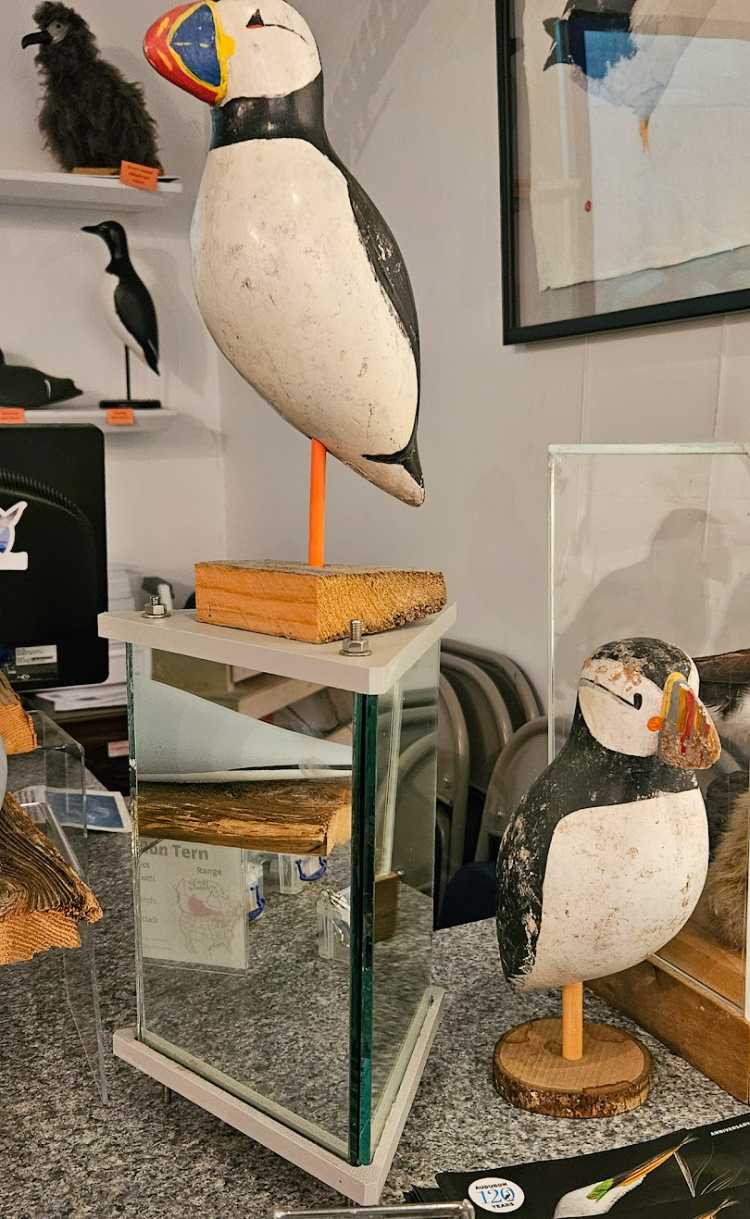
In 1973, Dr. Kress got permission from the Canadian government to bring 954 pairs of puffins over a few years from Great Island, Newfoundland, to Eastern Egg Rock, where he and his team had recreated the nesting sites as the puffins had created them. These little birds are known for their sociability, vocalizing during mating time, and nesting in burrows. To replicate all of this, Dr. Kress and his team created puffin decoys, recorded the birdsong of puffins, placed mirrors to trick the birds into thinking they were not alone, and rebuilt the nesting sites and burrows as the puffins had created them. Thus, Project Puffin was born, and the persistence of Dr. Kress and his team paid off – in 1981, a puffin chick returned to Eastern Egg Rock, followed by many others, and since the 1990s, the habitats of the Maine islands have had thriving colonies. Globally, Dr. Kress’s methodology to save native species of birds has been successfully replicated in Canada, the United Kingdom, New Zealand, Japan, South Africa, Australia, Iceland, Ireland, and China. He became a renowned ornithologist because of his dedication to his work restoring seabird habitats.
Why Puffins were Almost Driven to Extinction
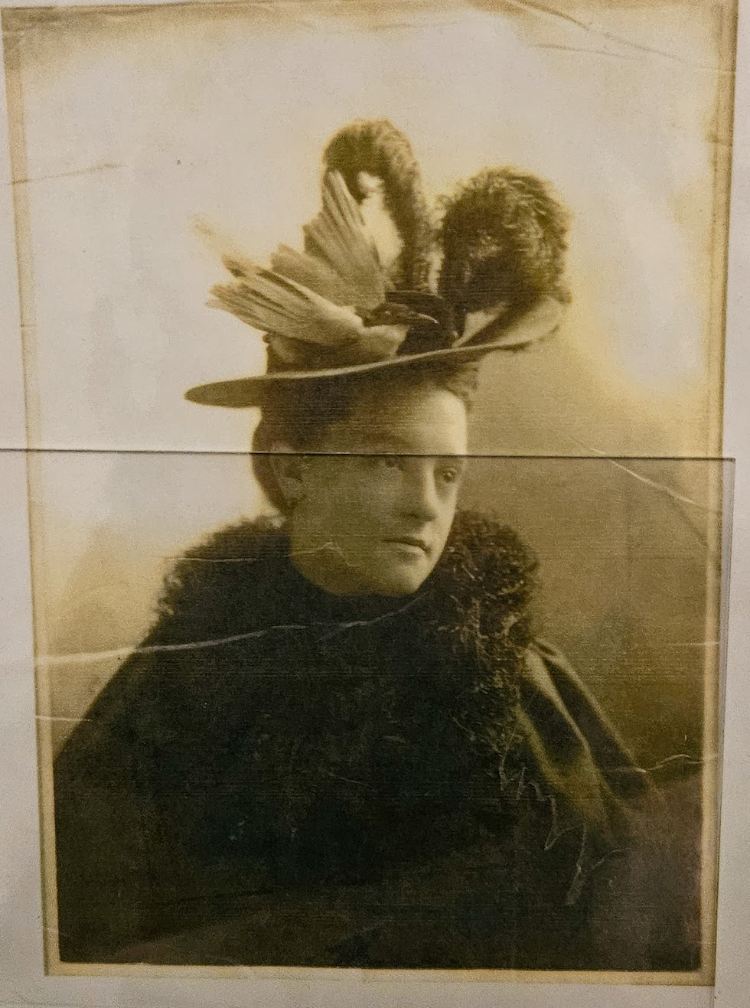
Farmers began to let sheep graze on the islands during the 18th and 19th centuries for wool to make warm clothing for Maine’s long, coastal winters as well as for meat and milk. The grazing sheep, however, destroyed the birds’ natural habitat by decimating island vegetation and hardening the soil, making it impossible for the puffins to build their nests. Sheep, however, were not the only reason for the near-extinction of Maine’s iconic bird – puffins were hunted for food, their eggs taken from nests, and their feathers were used to create fashionable women’s hats of the late 1800s. The practice of raising sheep on Maine’s islands declined because of larger-scale farming on the mainland, but by the early 1900s, only a single breeding pair remained on Matinicus Rock, 30 miles off the coast of Maine, the most distant of the Maine islands where puffins once roosted and thrived.
For Eight Years, the Puffins were able to roost on Matinicus Rock
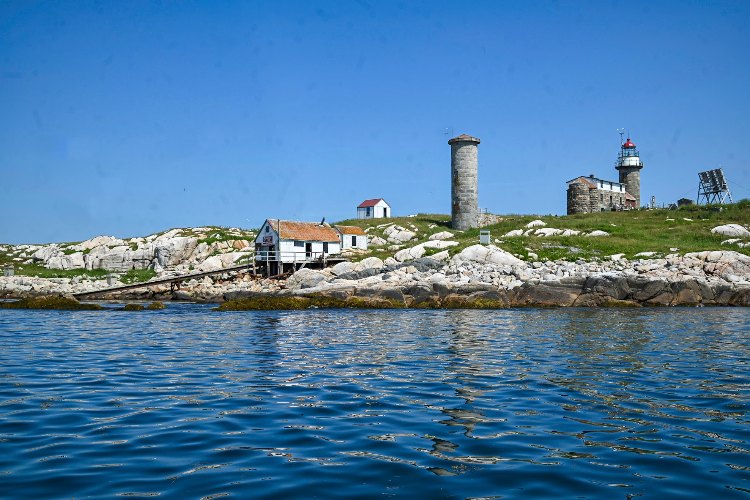
A short-lived respite happened on Matinicus Rock, locally known as “The Rock”, six miles to the east of Matinicus Island, when Samuel Burgess became the lighthouse keeper from 1853 until 1861. He and his family lived on the rocky, isolated island, and for eight years, the puffins were allowed to roost as nature intended. However, after the departure of the Burgess family from Matinicus Rock, the puffin habitat was once again under siege and by the early 1900s, only that single breeding pair remained. The species was essentially gone from Maine. (During Abbie’s eight years with her family on Matinicus Rock, Abbie gained fame for her heroic actions during a violent storm in 1856, which took place after her father had sailed to the mainland for supplies. Abbie kept the lighthouse lamps lit for ships caught in the storm while caring for her sick mother and younger siblings.)
A Few Facts about Puffins and their Environmental Importance
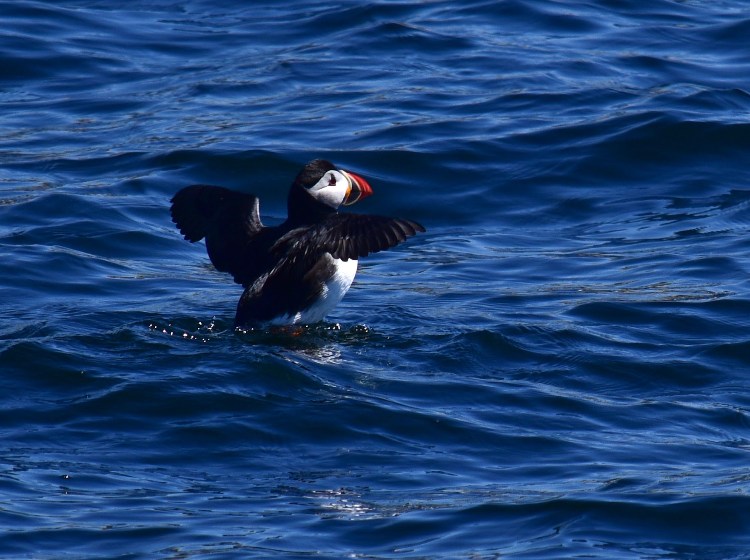
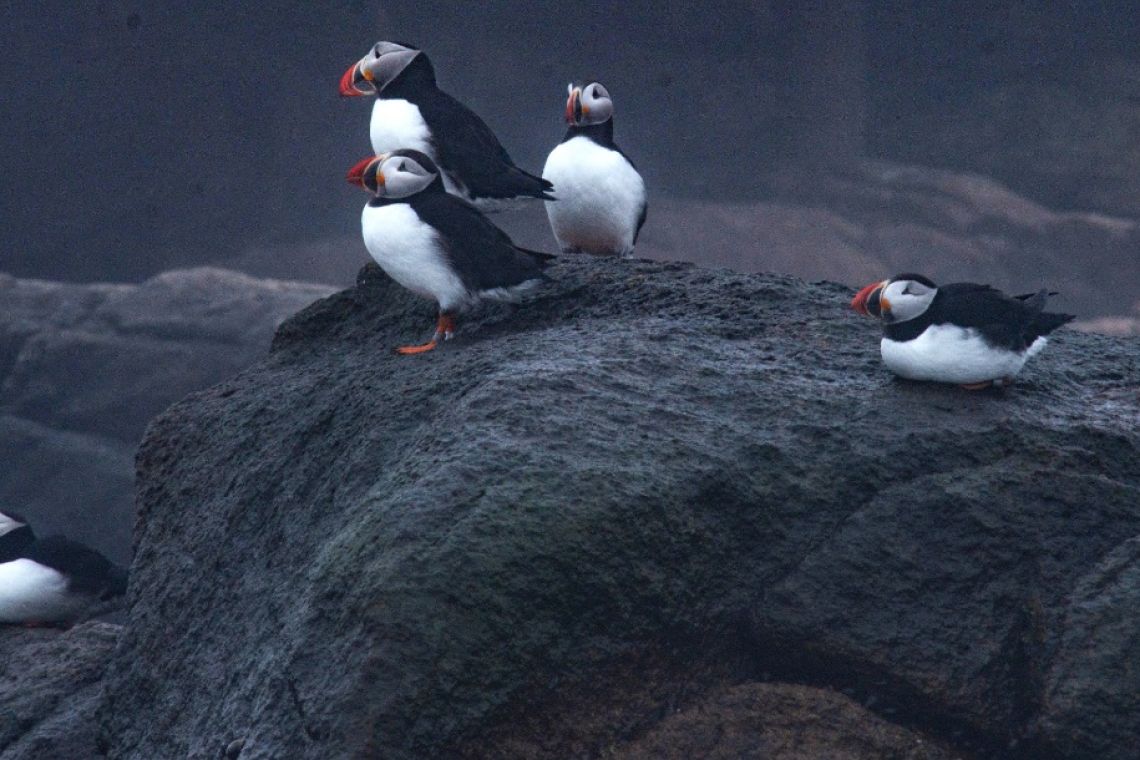
Puffins only weigh 283 to 453 grams,10 to 16 ounces, and they waddle when they walk towards other puffins, a delight to watch. These little sea creatures are not only social creatures but also monogamous. Puffins fly up to 50mph/80k/kmh, and their strong wings help them to “fly” underwater. It is estimated that their swimming speed reaches 6 to 10 mph (9 to 16 km/h) during dives where they hunt for small fish, such as young herring, and other small fish, several of which can be held in a puffin’s beak at the same time. All these features, along with their colorful, striped beaks in hues of orange, red, yellow, and blue during mating season, add up to one of the most popular seabirds in the world, delighting bird enthusiasts with both their unique appearance and playful behaviors.
The Environmental Importance of Saving Puffins and Other Birds from Extinction
Seeing these delightful little birds has cultural, educational, and economic significance; they are well known in coastal Maine, and seeing them from boats that approach the islands is a popular activity for tourists and local people from mid-May to mid-August, adding to the local economy. Educationally, both children and adults learn about their habitat and importance to the marine environment. Puffins also are essential to scientists carrying out marine and ornithological studies. The loss of puffins and other bird species could be an indicator of global warming. Puffins are a cold-weather breed and need the cold waters of the North Atlantic to survive and to eat fish that live in cold waters. The same necessity exists to protect the aggressive tern, which also inhabits Maine’s islands. The tern protects its own eggs as well as puffin eggs and eggs of other bird species from marauding seagulls, keeping the balance of marine ecosystems in place.
Worth the Trip to Matinicus Rock
Anyone who has experienced the joy of seeing puffins in their natural habitat can easily become enthralled by the antics of these little flying penguins. Their take-offs and landings make them look a bit clumsy, sometimes even rolling several times on the ocean before sitting upright and bobbing in chilly waters. Their colorful beaks and expressive faces make them the bird that many birders most want to see. Some people even make the long and beautiful trip to Matinicus Rock, known locally as “The Rock”, which entails a two-hour ferry trip on often choppy northern Atlantic waters, a one-hour passenger boat - the Robin R from Rockland to Matinicus Island, or a 10-minute plane trip to Matinicus Island. However, upon arriving on Matinicus Island, there is still a six-mile/10km trip to Matinicus Rock on the Robin R. Visitors must also keep in mind that flying on Penobscot Island Air or even coming by boat can only happen in clear weather, which can change rapidly in coastal Maine.
The Legacy of the Work of Dr. Kress and His Team
The methods used by Dr. Kress and his team seem far from the usual ways that science approaches a problem. To keep Maine’s puffins from extinction, no expensive laboratory was created; no long, drawn-out research methodology and years of time-consuming data analysis and observation were put into place; nor were data organized into graphs, charts, and time-consuming statistical analysis. Actions harmful to bird populations were replaced by recreating the natural habitat of a species that once thrived on Maine’s offshore islands. As a biologist, Dr. Kress recognized the vital role puffins play in the region's biodiversity and the ecological need to preserve it. He succeeded in demonstrating that after almost a century of decline, a species could be saved with creativity, human intervention, and commitment. Today, Maine’s puffins have come home and are thriving, living as nature meant them to live, and visitors get to see first-hand why these delightful birds are aptly nicknamed “Clowns of the Sea.”
Where to See Puffins on Maine’s Islands:
Puffins return to Maine’s islands from mid-May to mid-August to breed and raise their young after a winter in the North Atlantic.
To go to Eastern Egg Rock:
Website: Boothbay Harbor Boat Tours & Whale Watch | Cap'n Fish's Cruises
207 613 7339
Email:
42 Commercial Street
Boothbay Harbor, ME 04538
To go to Matinicus Island by plane:
Penobscot Island Air, located in Owl’s Head near Rockland
Website: Flypenobscot.com
207 596 7500
PIA also manages the Robin R, a boat which can hold 16 passengers from Rockland to Matinicus Island. The Robin R can be chartered to take passengers from Matinicus Island to Matinicus Rock.
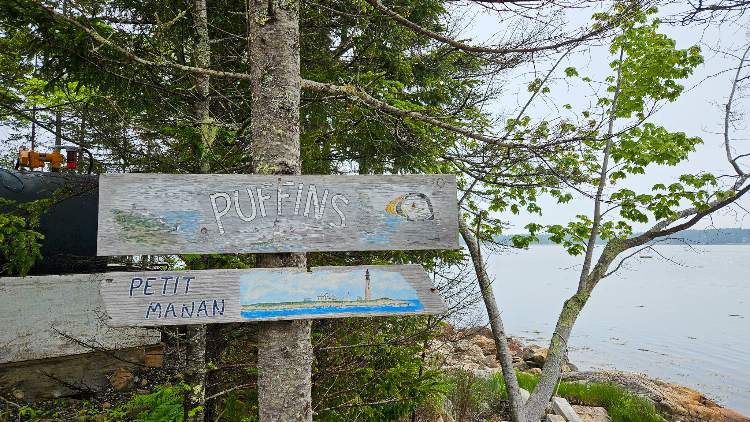
To go to Petit Manan Island:
Website: Acadia Puffin Cruise
207 598 7900
And:
Atlantic Edge Adventures - Milbridge, Maine
207 461 7439
All trips depart from
57 Bayview Street, Milbridge, Maine 04658
Maine State Ferry, Rockland
517A Main St, Rockland, ME 04841
Phone: 207 596 5400
Please note: The ferry only goes to Matinicus about 4 times a month.
Recommended Books for Children :
Keep the Lights Burning, Abbie by Connie Roop.
Puffins!: A My Incredible World Picture Book for Children by Hope Archer.
Lundi The Lost Puffin by Eric Newman.